

 Hong Kong

 Singapore
 UAE
UAE
 Malaysia
 Turkey
 UK
UK
 EU
EU
 US
US
 Switzerland
 Bahamas Bank Account
 Cayman Islands Bank Account
 Mauritius Bank Account
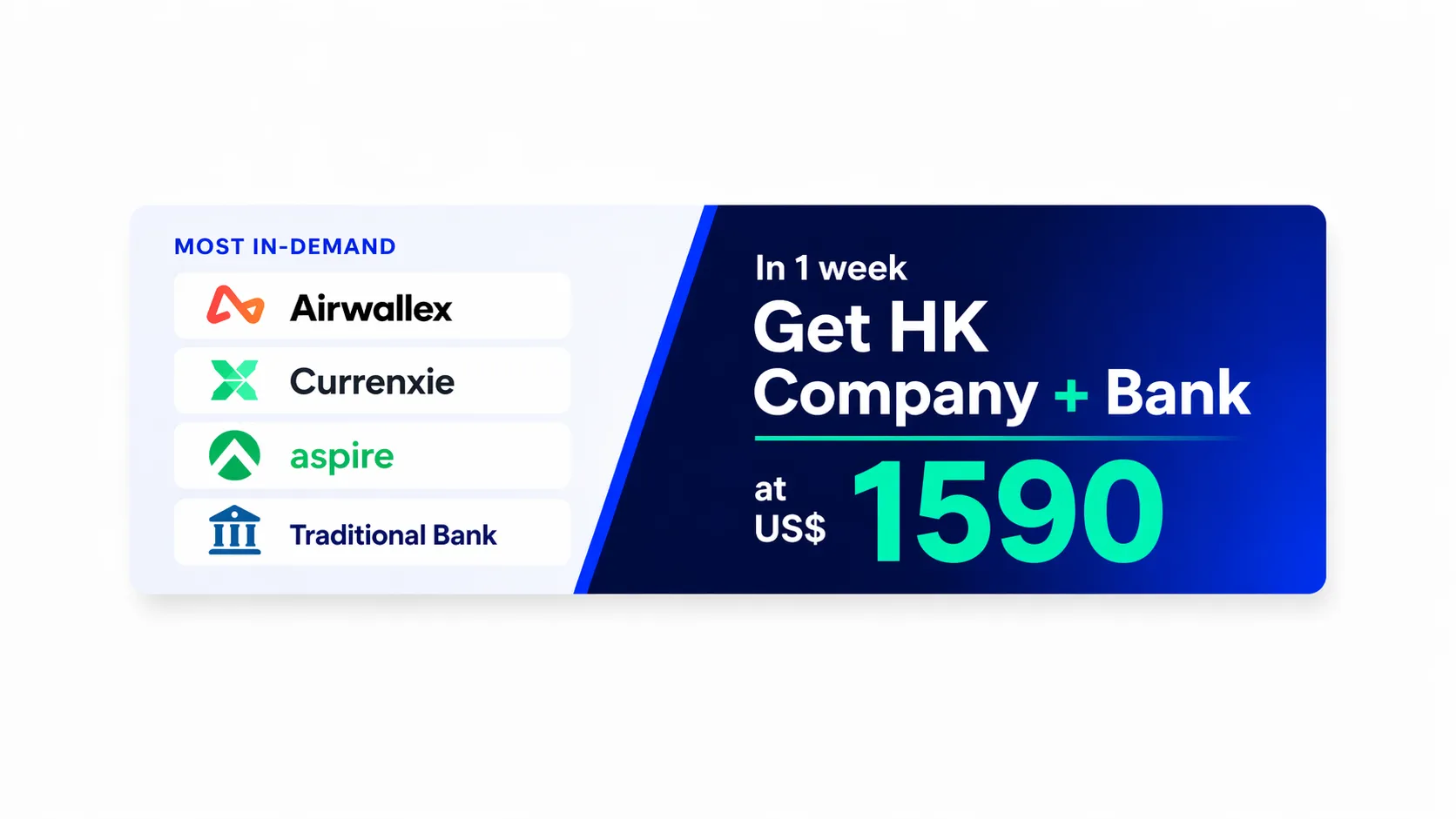
 BVI
BVI
 Seychelles


Selecting the strategic business banking account type and jurisdiction involves critical factors such as the company’s legal location, corporate structure, transaction volume, multi-currency requirements, and long-term banking objectives. An incorrect choice inevitably leads to severe regulatory difficulties, cross-border payment complications, and highly unstable banking relationships. This guide explains the decision framework global entrepreneurs should use when selecting a business account that actually works.
Why Most Founders Choose the Wrong Account
The biggest mistake people tend to make is picking banks based on their branding or convenience instead of suitability.
Businesses importing goods from China and paying suppliers in USD need something totally different compared to software-as-a-service businesses dealing with European clients in EUR. Banks build products for specific business profiles. Selecting an incompatible one results in rejections, frozen payments, and restricted functionality.
Related Reading: How to Choose the Right Business Bank Account
Step 1: Know What Your Business Requires
Before looking at any bank, map out your operational requirements.
This takes 20 minutes and saves months of banking friction.
Ask yourself:
1. What currencies do I send and receive?
Multi-currency needs require a multi-currency account
2. Where are my clients and suppliers located?
Cross-border transaction needs vary significantly by corridor
3. What is my monthly transaction volume?
Some accounts have caps or charge per transaction above a threshold
4. Do I need to accept card payments?
Merchant accounts require specific account types and integration
5. Does my business model carry higher compliance scrutiny?
Crypto, import/export, and financial services require specialist banking
6. How fast do I need the account?
EMI accounts open in days; traditional banks take weeks to months. This profile determines whether you need a traditional bank, an EMI virtual account, an offshore business account, or a combination of all three.
Related Reading: A Practical Guide to Opening an Offshore Bank Account
Step 2: Match Your Corporate Structure to the Right Account Type
Not every bank accepts every corporate structure.
The jurisdiction your company is incorporated in affects which banks will onboard you and how.
| Company Type | Recommended Account Type | Why |
|---|---|---|
| Hong Kong Company | Traditional HK bank or EMI | Strong banking ecosystem with high international credibility. |
| BVI or Seychelles Offshore Company | EMI first, then traditional bank | Offshore structures generally face higher scrutiny at traditional banks. |
| UAE Free Zone or Mainland Company | UAE bank or regional EMI | Strong regional banking relationships and local support. |
| Singapore Company | Singapore bank or regional EMI | Compliance-focused jurisdiction with strong international reputation. |
| Newly Incorporated Entity | EMI virtual account | Faster onboarding while building a compliance and banking track record. |
Explore company setup options by jurisdiction.
Related Reading: How to Open a Bank Account as a Non-Resident: A Practical Guide
Step 3: Know the Three Main Account Categories
Traditional Corporate Bank Accounts
These are full-feature accounts at licensed banks in jurisdictions like Hong Kong, Singapore, the UAE, Malaysia, the UK, and the EU.
Best for:
-
Established businesses with documented trading history
-
Companies requiring letters of credit or SBLC
-
Businesses needing correspondent banking relationships
-
Higher-volume operations that need institutional credibility
Timeline: Several weeks to a few months. Compliance requirements are thorough.
EMI Virtual Accounts
Electronic Money Institution accounts are digital-first corporate accounts that offer rapid onboarding and modern payment infrastructure.
Best for:
-
Startups and early-stage companies
-
Digital and tech businesses
-
Founders who need multi-currency wallets immediately
-
Businesses that have been rejected by traditional banks
Timeline: 48 to 72 hours in most cases. Crypto-friendly EMIs are available for blockchain businesses.
Offshore Business Bank Accounts
These accounts are held in offshore or international jurisdictions and are designed for cross-border operations, high-risk industries, and asset diversification.
Best for:
-
Import/export businesses
-
Commodity traders
-
Businesses serving restricted-nationality founders
-
Holding companies and treasury functions
Timeline: Varies. A pre-assessed application with proper documentation shortens timelines significantly.
Explore offshore banking options.
Step 4: Evaluate These Five Criteria Before Applying
Currency support
If you trade in multiple currencies, confirm the account supports them natively. Conversion fees on every transaction add up fast and reduce margins on cross-border deals.
SWIFT and SEPA access
International wire transfers require SWIFT. European payments require SEPA. Confirm both before applying, especially for trade finance operations.
Minimum deposit and balance requirements
Some traditional banks require minimum deposits of USD 10,000 or more. EMIs typically have no or low minimum deposit requirements. Match your cash position to the account's requirements.
Merchant and payment integration
If your business uses Shopify, WooCommerce, Stripe, or PayPal, confirm the account integrates with your payment stack. Not all business accounts support merchant functionality.
Compliance fit for your industry
Banks assess risk by industry category. E-commerce, consulting, and holding companies are generally under lower scrutiny. Crypto, gaming, and financial services require banks specifically structured for those models. Wrong institutions will waste your time and create a history of rejections for your future applications.
Step 5: Prepare Your Application Before Applying
The quality of the application matters more than what banking institution you select.
A strong application includes:
-
Company incorporation documents (certificate, articles of association, business registration)
-
Director and shareholder KYC (certified ID, proof of address, source of wealth statement)
-
Business plan written in plain English with clear revenue model
-
Transaction flow documentation showing where money comes from and where it goes
-
Supporting evidence of business activity (contracts, invoices, client correspondence)
Banks do not fill in gaps. If documentation is missing or unclear, the application is declined. Reapplying to the same bank after a rejection requires a significant waiting period at most institutions. See how Lion Business Co. prepares banking applications.
Related Reading: Why Was My Bank Account Application Rejected? An Entrepreneur’s Guide
How Lion Business Co. Helps You Choose and Open the Right Account
Lion Business Co. is a private advisory firm specialising in global bank account opening for SMEs, trading companies, holding structures, and high-risk businesses. The firm works with 100-plus banks and EMIs across more than 65 jurisdictions. The process begins with a pre-assessment that matches your business profile, nationality, and banking needs to the right institution. Documents are prepared to bank-compatible standards. Clients receive support through the full onboarding process.
Payment is only required after account approval. Start your business bank account consultation.