

 Hong Kong


 Singapore
 UAE
UAE


 Malaysia
 Turkey

 UK
UK
 EU
EU
 US
US
 Switzerland
 Bahamas Bank Account
 Cayman Islands Bank Account
 Mauritius Bank Account

 BVI
BVI
 Seychelles
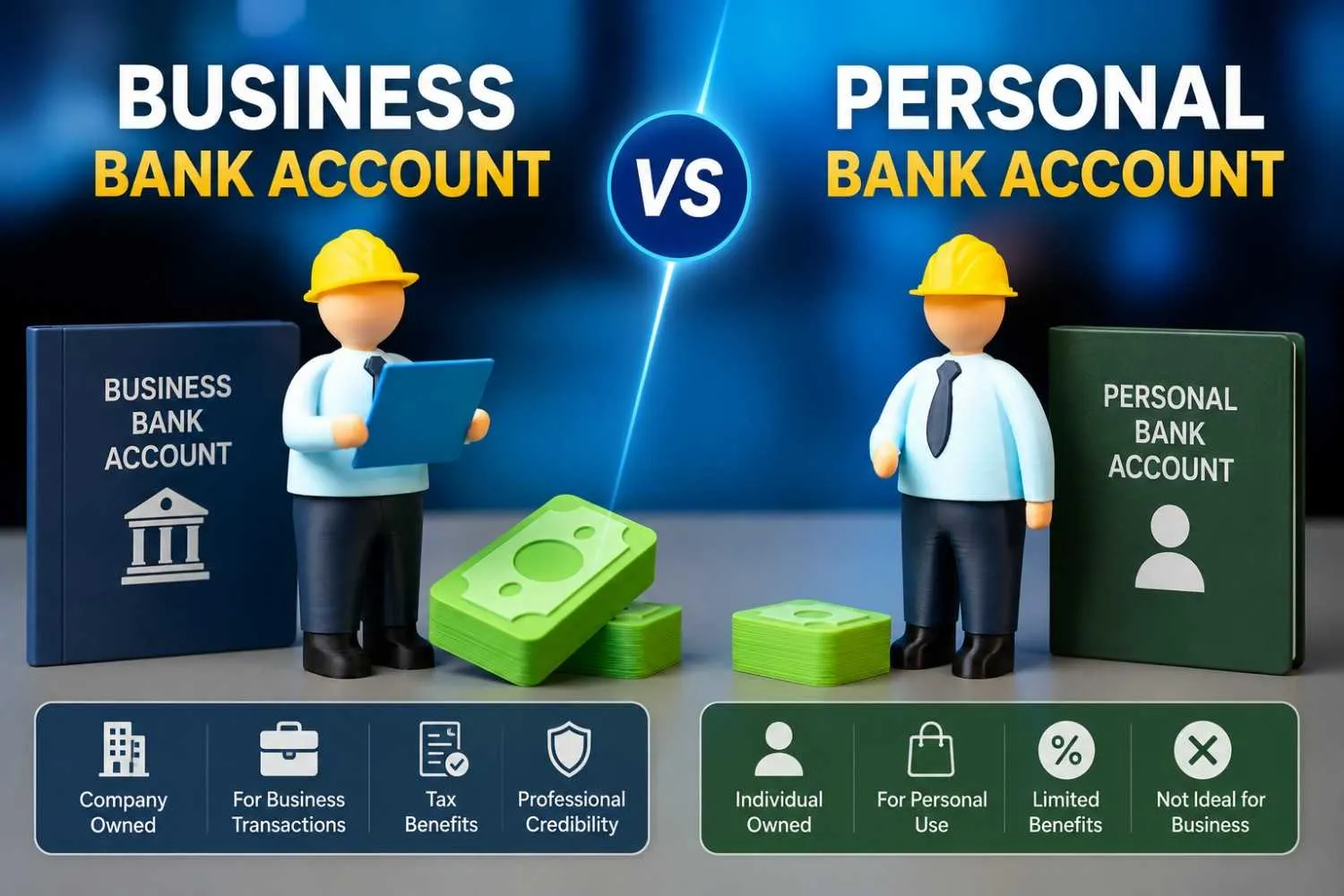

A business bank account is a distinct corporate structure opened strictly in the name of a registered entity and dedicated solely to executing commercial affairs. In contrast, personal accounts are held by private individuals and must be utilised solely for non-commercial purposes. The commingling of both financial structures inevitably causes severe compliance and operational problems.
Why This Decision Matters More Than Most Founders Realize
Co-mingling your personal and business banking accounts is arguably the most critical error that global entrepreneurs routinely commit. It extends far beyond mere organisation. The reality is that banking institutions and regulatory tax authorities govern these two account structures under entirely separate compliance frameworks. Rectifying this structural mistake retroactively will be exceptionally costly for your enterprise.
What Is a Business Bank Account?
A business bank account is a dedicated financial structure maintained by a corporate entity strictly under its own registered legal name.
Key features:
-
Account Owner: Corporate entity, rather than a private individual.
-
Transactions: Exclusively commercial income and operational business expenses.
-
KYB Requirements: Comprehensive identification and verification of the corporate structure, board directors, shareholders, and Ultimate Beneficial Owners (UBOs) by financial institutions.
-
Account Variations: Traditional current, multi-currency, merchant, and virtual accounts.
-
Financial Reporting: Mandatory compliance maintained via structured corporate financial statements and, depending on the jurisdiction, formal auditing.
Corporate bank accounts possess robust operational capabilities that personal accounts lack. They are strategically deployed to process high volumes of commercial transactions, secure international cross-border transfers, integrate merchant payments, and manage corporate treasury activities.
What Is a Personal Bank Account?
Personal bank accounts are maintained strictly in the name of private individuals for personal, non-commercial use.
They require standard KYC verification protocols only.
Key features:
-
Account holder: An individual
-
Transactions: Personal income, bills, consumer spending
-
Reporting: Subject to personal income and tax reporting
-
Limits: Typically not structured for high-volume commercial transactions or business use
This exposes both accounts to severe risk, as financial institutions will freeze or flag them upon detecting any commercial transactions that breach the personal account terms of service.
Business Bank Account vs Personal Bank Account: Side-by-Side Comparison
| Factor | Business Bank Account | Personal Bank Account |
|---|---|---|
| Account Holder | Registered company | Individual |
| Purpose | Commercial transactions | Personal finance |
| KYC/KYB Requirements | Company + directors + UBOs | Individual only |
| Multi-currency Support | Standard in most business accounts | Limited |
| Merchant Payment Acceptance | Available | Not available |
| Liability Protection | Separate from personal assets | No separation |
| Tax Reporting | Corporate level | Personal level |
| Audit Exposure | Possible depending on jurisdiction | Rare |
| Onboarding Timeline | Days to months depending on bank type | Typically fast |
Why Banks Reject Business Activity on Personal Accounts
Banks monitor transaction patterns. When a personal account shows:
-
Regular inbound transfers from multiple companies
-
High volumes inconsistent with declared personal income
-
International wire transfers in commercial amounts
-
Payments labeled as invoices or business receipts
It’s the compliance team that flags it. In most jurisdictions, this triggers a suspicious activity review. Accounts get frozen pending investigation, sometimes permanently closed.
This is a real and recurring problem for early-stage founders who delay opening a proper business account.
What Happens to Your Liability Without Separation
One of the clearest legal reasons to keep these accounts separate is liability protection. When a company holds its own bank account and financial records, the legal separation between the business and its owners is easier to maintain.
Courts and creditors recognise the distinction.
When personal and business funds are mixed, that separation weakens. In legal disputes, creditors may argue the company is not a distinct entity from the owner. This is known as piercing the corporate veil, and it has real consequences for asset protection.
Why Global Entrepreneurs Specifically Need a Business Account
For founders operating across borders, the need for a proper business account goes beyond compliance.
Reasons global SMEs need a dedicated business account:
-
Multi-currency payments: Paying suppliers in US dollars, euros, and Chinese yuan while charging customers in GB pounds needs an account for multi-currency operations.
-
Merchant payments acceptance: Visa, MasterCard, and Stripe need a business account
-
International wire transfers: The banks handle individual and business international wire transfers differently based on limits and restrictions.
-
Investor and partner credibility: Any investor, accelerator, or institutional partner will ask for a business account before working with you
-
Tax filing clarity: Corporate accounts generate clean statements that make tax filings significantly more straightforward
According to Lion Business Co.'s advisory experience across 65-plus global banks, the absence of a dedicated business account is one of the top three reasons SMEs face banking friction and delays during cross-border expansion.
When to Open a Business Bank Account
The answer is before the first client invoice goes out.
Many founders wait until revenue starts to arrive. By that point, transactions are already flowing through personal accounts, and the cleanup required to separate them properly adds weeks of administrative work, plus potential tax complications.
The practical approach is to open a business account at incorporation or immediately after.
Types of Business Accounts Available to Global Entrepreneurs
Not all business accounts are the same. The right type depends on the business model, jurisdiction, and banking needs.
-
Traditional corporate accounts: Full-featured accounts through licensed banks. Ideal for established businesses with documented activity
-
Virtual EMI Accounts: Virtual accounts provided by Electronic Money Institutions (EMIs) which feature a 48-to-72-hour onboarding turnaround and support multi-currency wallets.
-
Corporate Offshore Accounts: Accounts maintained by businesses in premier jurisdictions such as Hong Kong, Singapore, and the United Arab Emirates, leveraging a robust international banking infrastructure.
-
Merchant accounts: Dedicated accounts for accepting card and payment gateway transactions
Explore business banking options across 65+ global banks.
Start Your Business Account the Right Way
Lion Business Co. is a private advisory firm that helps global entrepreneurs open and structure business bank accounts across traditional banks, EMIs, and offshore institutions. The process starts with a pre-assessment to match your business model, nationality, and banking goals to the right institution. Payment is only required after account approval. Start your business banking consultation here.