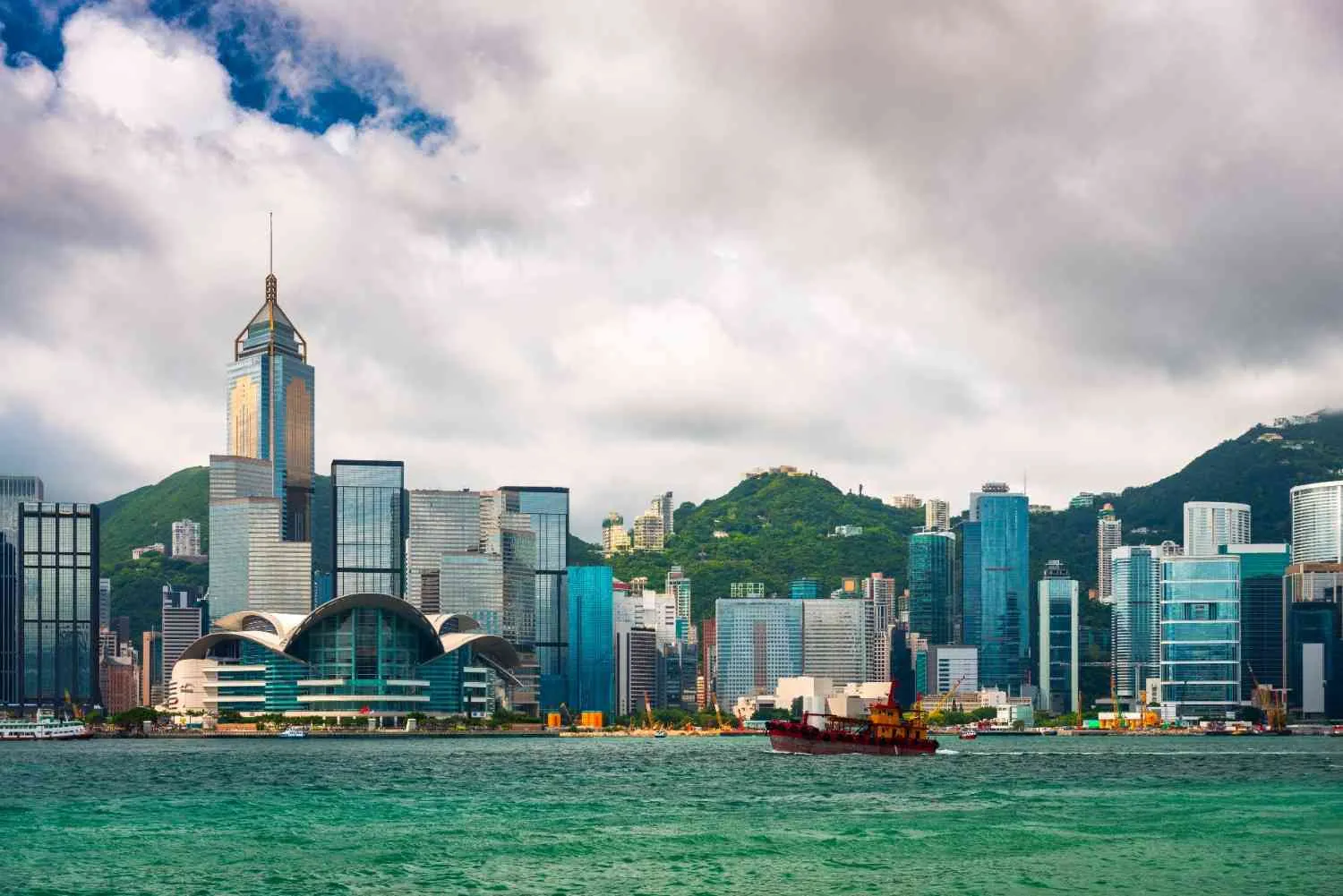

 Hong Kong
 Singapore
 UAE
UAE

 Malaysia
 Turkey
 UK
UK
 EU
EU
 US
US
 Switzerland
 Bahamas Bank Account
 Cayman Islands Bank Account
 Mauritius Bank Account
 BVI
BVI
 Seychelles

Opening a bank account in Hong Kong requires serious preparation—there’s no doubt about it. But for entrepreneurs with a global vision, the city's strategic advantages as a rock-solid financial centre are more compelling than ever.
While the process has definitely tightened up over the years, Hong Kong's world-class banking infrastructure, stable currency, and top-tier digital services make it a powerful move for long-term business growth.
Why Hong Kong Is Still a Top Choice for Business Banking
Let’s be honest—opening a business bank account here isn’t the walk in the park it was a decade ago. Stricter global regulations mean banks are asking more questions and requiring more paperwork. So, why do so many smart entrepreneurs still see it as a non-negotiable step?
It all comes down to Hong Kong’s unique role as a powerhouse for international business. This isn't just another city; it's a vital bridge connecting Western markets with Mainland China and the rest of Asia. For any small or medium-sized enterprise (SME) with cross-border ambitions, that positioning is a massive strategic asset.
A Real-World Scenario: E-Commerce Growth
Picture this: you run an e-commerce business out of Europe. You’re sourcing products from suppliers in Shenzhen and Vietnam, and you’re constantly juggling currency conversions. Every supplier payment means losing a slice to fees and waiting on slow, unpredictable international transfers.
This is exactly where a Hong Kong bank account can transform your operations.
By setting up a multi-currency account here, you can suddenly:
- Accept payments from global customers in major currencies like USD, EUR, and GBP.
- Pay your Asian suppliers directly in HKD or CNY, skipping the costly double-conversion fees.
- Hold your capital in the Hong Kong Dollar (HKD), a stable and freely convertible currency.
This move does more than just save you money on transaction fees. It makes your entire supply chain faster and far more efficient. You stop reacting to payment headaches and start building a financial backbone that's actually designed to scale with your business.
The Foundation of a Global Financial Centre
At its core, Hong Kong's banking system is built on stability and trust. The sheer volume of capital flowing through the city speaks for itself. For instance, total deposits in Hong Kong’s financial institutions saw a year-on-year increase of roughly 9.7% by late 2025, a clear sign of the continued confidence in its banking sector.
This isn't about finding a tax haven. It's about plugging your business directly into a world-class financial ecosystem. The city’s simple, low-tax regime is a nice bonus, but the real prize is the operational excellence and global connectivity you gain.
While the application process requires you to be organised, the rewards are undeniable. For a broader perspective on your options, exploring guides on understanding how to open an offshore company and bank account can be incredibly helpful. The effort you put in upfront to secure a Hong Kong bank account will pay dividends in operational freedom and growth potential for years to come.
Choosing the Right Banking Partner in Hong Kong
Picking a bank in Hong Kong isn't about finding the one with the most familiar logo. It’s about securing a genuine financial partner that actually understands your business model. Get this right, and it can genuinely accelerate your growth. Get it wrong, and you’re signing up for constant operational headaches.
This decision goes way beyond the simple "big bank vs. new fintech" debate. It's a strategic choice that has to line up perfectly with your cash flow, your customer base, and where you plan to take your company.
Your Business Model Dictates Your Banking Needs
Let's ditch the generic checklists for a moment and look at this from a practical standpoint. The banking requirements for a global SaaS company are worlds apart from those of a business importing and exporting physical goods.
For example, imagine you run a software-as-a-service (SaaS) business with customers paying you from North America and Europe. Your priorities are crystal clear:
- Seamless international payments: You need an efficient way to collect recurring revenue in USD and EUR without getting hammered by conversion fees.
- Multi-currency accounts: Holding foreign currencies without being forced to convert them to HKD is a must for managing your global cash flow.
- API integrations: The ability to plug your bank account directly into accounting software like Xero or QuickBooks is a non-negotiable timesaver.
Now, flip the script. Consider a trading company importing goods to sell across Asia. Their banking wishlist looks entirely different:
- Trade finance facilities: Access to letters of credit and other trade financing tools isn't just a "nice to have"—it's often essential for securing deals with suppliers.
- A strong branch network: Sometimes, you just need to sit down with a dedicated relationship manager to sort out complex transactions.
- Reputation and stability: When you’re dealing with high-value international shipments, the credibility of your banking partner is paramount.
Making the right choice starts with being brutally honest about what your business needs to operate smoothly day-to-day. For a more detailed breakdown, our guide on choosing the right Hong Kong bank for your business offers a deeper dive.
Traditional Giants vs. Digital Challengers
Hong Kong's banking scene is a fascinating mix of established, powerhouse institutions and nimble, tech-savvy players. Each brings something different to the table for an SME.
Traditional Banks (e.g., HSBC, Standard Chartered)
These are the household names. They bring a legacy of trust, a massive range of services, and the comfort of a physical branch network. For any business needing complex services like trade finance, they are often the only real option.
The sheer scale of these institutions is staggering. As of mid-2025, HSBC alone reported customer account balances topping HKD 6.24 trillion, a figure that speaks volumes about the depth of Hong Kong's financial system.
Digital Banks & EMIs (e.g., ZA Bank, Airwallex)
The newcomers are built from the ground up for the digital economy. Their strengths lie in a slick user experience, incredibly fast remote onboarding, and very competitive foreign exchange rates. For an e-commerce brand or a tech startup, their modern platforms and API-first approach can be a perfect match.
To help you see the differences more clearly, here’s a side-by-side comparison.
Traditional Bank vs. Digital Bank/EMI Comparison for SMEs
| Feature | Traditional Banks (e.g., HSBC, Standard Chartered) | Digital Banks & EMIs (e.g., ZA Bank, Airwallex) |
|---|---|---|
| Onboarding Process | Often requires in-person visits; can take weeks. | Fully remote and digital; can be as fast as 24-48 hours. |
| International Payments | Reliable but can have higher fees and slower processing times. | Typically faster and cheaper, with transparent, real-time FX rates. |
| Multi-currency Support | Offered, but sometimes with more rigid structures. | A core feature, often with local account details in multiple countries. |
| Complex Services | Strong offerings for trade finance, loans, and overdrafts. | Limited or no offerings for traditional trade finance or complex lending. |
| Customer Support | Dedicated relationship managers (for larger accounts), branch access. | Primarily digital (chat, email, ticketing); can lack a personal touch. |
| Technology & APIs | API access is improving but can be clunky and less developer-friendly. | API-first approach, built for easy integration with other software. |
| Monthly Fees | Often requires maintaining a minimum balance to avoid fees. | Frequently lower or no monthly fees, with a pay-as-you-go model. |
Ultimately, this isn't about one being "better" than the other. The best choice is the one that removes friction from your specific operations.
The crucial takeaway is this: Don't just default to the biggest name. Instead, map your daily, weekly, and monthly financial activities. This simple exercise will reveal whether you need the robust, all-encompassing services of a traditional bank or the speed and flexibility of a digital alternative.
When you can walk into a meeting (or a video call) and clearly explain why that bank’s specific services are a perfect match for your business plan, you stop being just another applicant. You become a potential long-term partner. That clarity is your single greatest asset in the entire process.
Getting Your Paperwork in Order: Documents and KYC
Let's be honest, the paperwork for a Hong Kong bank account can look intimidating. But think of it less like a bureaucratic chore and more like building a case for your business. You're not just filling out forms; you're telling the bank a clear, compelling story that proves you're a legitimate, trustworthy client.
This entire process revolves around one key concept: Know Your Customer (KYC). This isn't just a bank policy; it's a strict legal requirement to combat money laundering and financial crime. The bank must understand who you are, what your business does, where your money comes from, and where it's going. Your goal is to make it incredibly easy for them to tick all their compliance boxes.
The Essential Document Checklist
While each bank has its own quirks, there's a standard set of documents you'll need pretty much everywhere. Getting these organised first is half the battle.
Here’s the baseline of what you'll be asked for:
- Company Incorporation Documents: This means your Certificate of Incorporation and your Articles of Association. These are the legal birth certificates of your company.
- Business Registration Certificate: The official certificate from the Hong Kong government that proves you're registered to operate.
- IDs for Everyone Involved: You'll need certified true copies of passports and a recent proof of address (like a utility bill from the last three months) for every director, major shareholder (typically anyone with 10% or more), and any person authorised to sign on the account.
- Proof of Business Activity: This is a big one, and where many people stumble. You need to show your business is a living, breathing entity. This could be signed contracts with clients, purchase orders from suppliers, or even a well-developed website that clearly shows your products or services.
Think about it from the bank's perspective. The company papers prove the business exists, the personal IDs prove who's behind it, and the business proof shows it’s actually doing something.
Tell Your Business's Story
Beyond the official certificates, the most important piece of your application is your business plan. And I don't mean some generic template you downloaded online. Hong Kong bankers have seen it all, and they can spot a lazy, copy-paste business plan from a mile away.
Your plan needs to tell a story that answers the bank’s unspoken questions:
- How do you actually make money? Be specific. What are you selling, to whom, and at what price?
- Who are your main suppliers and customers? Critically, where in the world are they? This helps the bank anticipate your transaction patterns.
- Why Hong Kong? What is your link to the city? This is often called "business substance" or "nexus," and it's a deal-breaker.
For example, don't just say, "We run an e-commerce business." Instead, try something like: "We source artisanal leather goods from a specific supplier in Florence, Italy, and sell them directly to customers in the US and Canada through our Shopify store. We require a Hong Kong multi-currency account to pay our Italian supplier in EUR and receive USD from our North American sales."
That single sentence paints a crystal-clear picture of your international cash flow.
Expert Tip: Vagueness is the enemy. A fuzzy business description is the number one reason applications get bogged down or flat-out rejected. Banks are naturally risk-averse. If they can’t quickly grasp your business model, they'll simply say "no" rather than dig for details. Be ruthlessly clear.
The All-Important 'Business Substance'
I can't stress this enough: you must demonstrate a genuine business substance or connection to Hong Kong. The regulators are cracking down hard on shell companies, and banks are on the front line of that fight.
You have to show a legitimate reason for banking here. But "substance" doesn't necessarily mean you need a big office and a full-time staff. It can be demonstrated in other ways:
- Having key suppliers or major customers located in Hong Kong or Mainland China.
- Using Hong Kong as a central point for logistics and shipping.
- Having a director or key manager who actually lives in the city.
Showing this evidence upfront proves you've done your homework and understand their compliance obligations. It positions you as a serious, well-run company.
For anyone serious about getting this right, our deep-dive on how to prepare compliance documents for a bank account is an essential read. Trust me, putting in the effort to get your documentation perfect from the very beginning is the best investment you can make for a fast, successful account opening.
The Account Opening Process: In-Person vs Remote
One of the biggest questions I get from international founders is, "Do I really need to fly to Hong Kong to open the account?" Not so long ago, the answer was a simple "yes," but that's all changed. Whether you go the traditional in-person route or opt for a fully remote setup will dramatically affect your timeline, the documents you need, and even which banks are on the table.
The classic approach involves a face-to-face meeting, while the modern alternative uses technology to get you onboarded from anywhere in the world. Knowing the ins and outs of each is crucial for planning your next move.
Regardless of the path you choose, the bank's core document requirements remain the same. They need to see a complete picture of your company, its business, and the people running it.
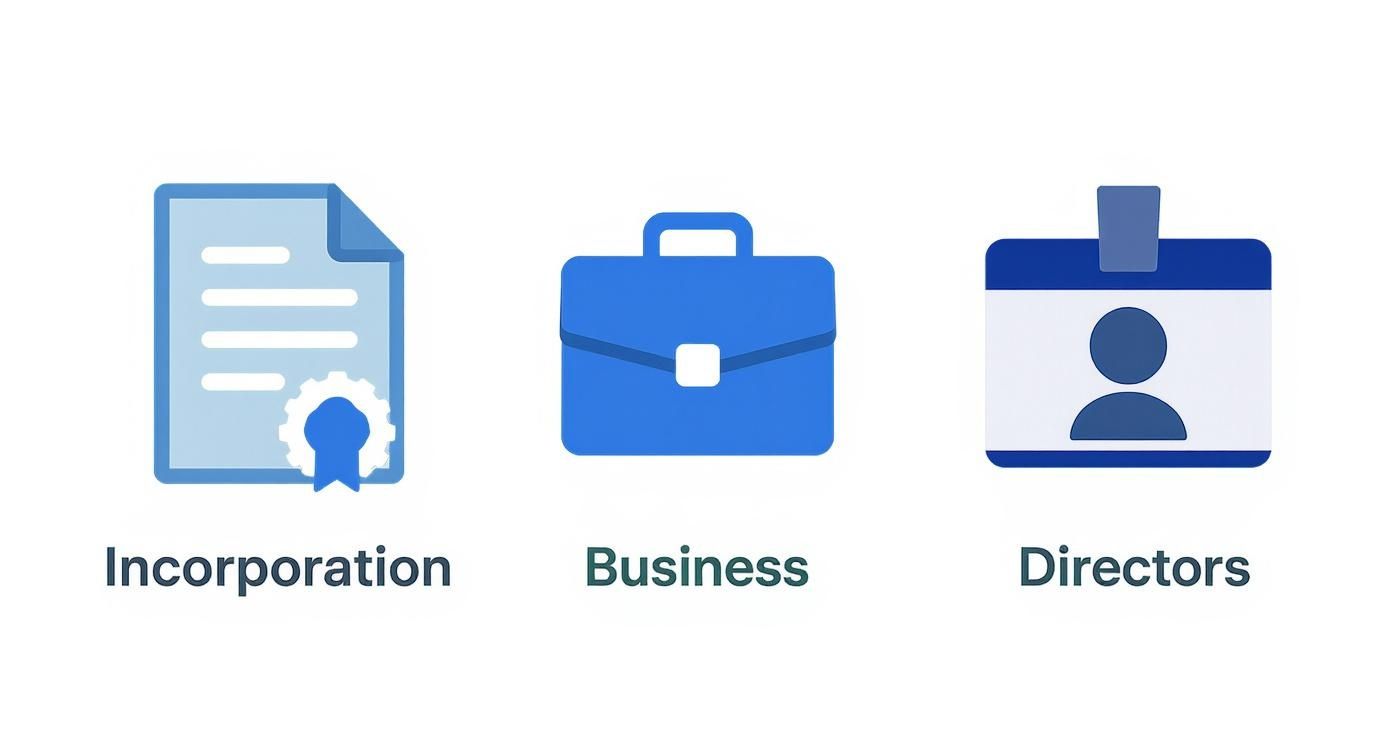
From your official company registration to proof of your business activities and director IDs, each piece is a vital part of the bank's compliance puzzle.
The Traditional In-Person Bank Meeting
For many of Hong Kong’s household-name banks, an in-person meeting is still a non-negotiable part of their due diligence. This isn't just a box-ticking exercise; it's their chance to meet the people behind the paperwork and get a real feel for your business.
Typically, all authorised account signatories and at least one key director must be there in person. You'll sit down with a relationship manager who will ask very specific questions about your business model, your customer base, and the kinds of transactions you expect to make.
Be ready to clearly explain:
- Your Revenue Model: How, exactly, does your company make money? Prepare to walk them through a typical transaction, from a client paying an invoice to you paying a supplier.
- Your Connection to Asia: Why do you specifically need a Hong Kong bank account? What part of your supply chain, customer base, or operations is centred here? A vague answer won't cut it.
- Your Financial Projections: They'll want to know your anticipated monthly transaction volumes and values. This helps them gauge risk and decide if your business is a good fit.
Think of it as a pitch. Your job is to build trust and make a solid first impression. A well-prepared, confident presentation can often be the deciding factor that turns a borderline application into an approval.
Here's a real-world example: We once had a client with a tech startup whose business model looked a bit complex on paper. He flew in, sat down with the bank manager, and gave a live demo of his software. He cleared up all their questions in about ten minutes. The account was approved a short time later. That human touch can be incredibly powerful.
The Rise of Remote Account Opening
Thankfully, a trip to Hong Kong is no longer the only way forward. The city's embrace of fintech and digital banking has completely changed the game. A 2025 survey showed that around 62.9% of residents now have a digital banking account, a clear signal that technology-driven processes are here to stay. This has pushed both the new virtual banks and even some traditional players to finally offer remote onboarding. We explore some of these options in our guide on how to open a Hong Kong bank account without visiting the country.
This process is built entirely on technology:
- Video Verification: You'll schedule a video call with a bank representative to confirm your identity, usually by holding your passport up to the camera.
- E-Signature Platforms: All the application forms and agreements are signed digitally using secure, recognised platforms.
- Digital Document Uploads: All your certified documents are submitted through a secure online portal.
The convenience is undeniable, particularly for tech-first businesses. The catch? Your documentation has to be perfect. There's much less room to explain away any grey areas or ambiguities than you'd have in a face-to-face meeting. To get a sense of what the banks are looking for, it helps to understand their customer onboarding best practices.
Timelines and Expectations
The path you choose will have a direct impact on how long everything takes. A slick remote application with a digital bank could have you up and running in just a few weeks. On the other hand, going the traditional in-person route with a major high-street bank can easily take one to three months, even after your meeting. It's vital to set realistic expectations from the start so you can plan accordingly.
Why Bank Accounts Get Shut Down (and How to Avoid It)
Getting that business bank account approved feels like a huge win. And it is. But the work doesn't stop there. Far too many entrepreneurs get a nasty shock months down the line when their account is suddenly frozen or closed, often with very little explanation.
This isn't just bad luck. Banks are under massive regulatory pressure, and their systems are built to flag anything that seems out of the ordinary. Knowing what triggers these alarms is your best defence. Let's walk through the common traps I've seen trip people up and, more importantly, how you can sidestep them entirely.
Your Business Doesn't Match Your Paperwork
One of the fastest ways to get your account flagged is when your real-world transactions don't line up with the business plan you gave the bank. When they approve your account, they create a profile of what your activity should look like. When reality clashes with that profile, alarm bells start ringing.
Here’s a classic example: You told the bank you’re a software consultant who gets paid by clients in the USA. A few months later, you start receiving large, regular payments from a logistics firm in Eastern Europe. To a compliance algorithm, that looks suspicious.
The fix here is simple: talk to your bank. If you pivot your business or land a big new client in a different field, let your relationship manager know before the money starts moving. A quick email explaining the new venture provides context and keeps everyone on the same page. It turns a potential red flag into a simple business update.
Complicated Ownership or High-Risk Connections
Banks are legally required to know who ultimately owns and benefits from the company—the "Ultimate Beneficial Owner" or UBO. If your ownership is a tangled mess of shell companies, trusts, or nominee directors, especially if they trace back to jurisdictions on a financial watchlist, you're creating a compliance nightmare for them.
The bank’s perspective is brutally simple: if they can't easily figure out who owns the money, they don't want the risk. Transparency isn't just a nice-to-have; it's a deal-breaker.
The best approach is to keep your corporate structure as clean as possible. If you need a complex setup for legitimate tax or legal reasons, have your accountant or lawyer prepare a crystal-clear structure chart. Accompany it with a simple explanation of why it’s organised that way. This shows you're being upfront and have nothing to hide.
No Real Reason to Be Banking in Hong Kong
As we covered earlier, banks need to see a genuine business reason—a "nexus"—for you to be banking in Hong Kong. If your company is registered here but your directors, customers, and suppliers are all somewhere else, the bank will eventually ask why you need them. That question is often the first step towards them closing your account.
Picture this: A Hong Kong-registered company has directors in the UK, sells its products only in Australia, and gets its materials from Brazil. There’s no operational tie to Hong Kong. The bank sees this as pure "brass plate" banking, which they are actively trying to avoid.
Your job is to build and document that connection. This could mean working with a Hong Kong-based logistics partner, hiring a local contractor, or actively selling to clients in the region. Keep records of invoices, contracts, and emails that prove this "business substance." It's the evidence you'll need if the bank ever questions your presence.
Sudden or Strange Transactions
Your first few months are critical. The bank is watching your activity to establish a baseline of what's "normal" for your business. Any sudden spikes or weird transactions can trigger an automated freeze while they investigate.
Here’s a textbook red flag: The very first transaction after opening a bank account is a massive, six-figure transfer to a personal account in a country that has nothing to do with your business. This screams fraud or money laundering to a bank.
Again, communication is key. If you have a large or unusual payment coming up, give your relationship manager a heads-up. A quick call to say, "We just closed a big deal and will be wiring a deposit to our new supplier in Vietnam next week," provides the context they need. It’s a simple step that can prevent your funds from being locked up for days.
Navigating these potential pitfalls might seem daunting, but it really boils down to transparency and proactive communication. To make this easier to manage, we've put together a table summarising the most common red flags and the specific actions you can take to prevent them from becoming problems for your business.
Account Opening Red Flags and Preventative Actions
| Common Red Flag | Why It's a Problem for Banks | How to Proactively Address It |
|---|---|---|
| Business activity mismatch | It suggests you weren't truthful in your application or are involved in activities the bank hasn't approved. | Inform your bank before you pivot or add a new business line. Provide updated business plans or contracts. |
| Complex/Opaque ownership | The bank can't easily identify the Ultimate Beneficial Owner (UBO), which is a major anti-money laundering (AML) requirement. | Keep your corporate structure simple. If it must be complex, provide a clear chart and written explanation from a lawyer or accountant. |
| No "nexus" to the jurisdiction | Banks are under pressure to close accounts that lack genuine business substance in their region. | Build and document real business ties: local suppliers, customers, staff, or partners. Keep records of all local activity. |
| Unexpected transaction patterns | Sudden large payments or transfers to high-risk countries trigger automated fraud and AML alerts. | Give your relationship manager a heads-up before any large, unusual, or out-of-character transactions. |
| Incomplete/Outdated KYC info | Your contact details, director information, or business registration are out of date, making you a compliance risk. | Set a yearly calendar reminder to review and update all your corporate and personal details with the bank. |
Keeping these points in mind from day one will not only help you get your account approved but, more importantly, ensure it stays open and functional as your business grows. This isn't about appeasing the bank; it's about building a stable financial foundation for your company.
Your Hong Kong Banking Success Checklist
Getting a bank account in Hong Kong takes a bit of planning, but it's a completely achievable — and powerful — move for any global business. The secret? It all comes down to building trust with your chosen bank from the very first conversation.
Your application needs to tell a clear and compelling story. Show them who you are, what your business does, and why Hong Kong is the right fit. When you present a well-organised file that anticipates their compliance questions, you’re no longer just an applicant; you’re a potential long-term partner. This simple shift in approach can make all the difference.
To help you pull everything together, we've created a handy tool.
Your Next Step: Download our free, comprehensive Hong Kong Bank Account Application Checklist. It’s a practical list covering every document and preparation tip from this guide, so you can walk into your appointment confident that you haven't missed a thing.
If you’d rather have an expert guide you through the process for a smooth, stress-free experience, we're here to help. At Lion Business Consultancy Limited, this is exactly what we do.
[Book a Free Consultation with Our Banking Specialists Today]
Answering Your Top Questions About Opening a Bank Account
Stepping into the world of international banking always raises a few questions. Let's tackle some of the most common ones we hear from entrepreneurs trying to get set up in Hong Kong.
Can I Open an Account Without Visiting Hong Kong?
Honestly, it depends entirely on the bank. Many of the big, traditional names like HSBC or Standard Chartered still have a strong preference for seeing you in person. They’ll often want at least one director, if not all authorised signatories, to show up for a face-to-face meeting.
But things are definitely changing. The new wave of virtual banks and specialised fintechs has made fully remote account opening possible. They’ve swapped the in-person meeting for video verification calls and slick digital uploads, so you can get everything done without booking a flight. Your choice of bank is what really determines whether you need to be physically present.
How Long Does the Account Opening Process Take?
The timeline can really swing one way or the other. If you have all your ducks in a row and go with a digital-first or virtual bank, you might be surprised at how quickly it moves. We've seen accounts opened in as little as two to four weeks. These providers are built for speed.
On the other hand, traditional banks, especially if your company has a more complex international ownership structure, tend to move at a slower pace. You should probably plan for it to take anywhere from four to eight weeks, and sometimes even a couple of months, after your first meeting. The best way to speed things up? Have every single document perfectly organised and be ready to answer the bank's questions the moment they ask.
What Is Proof of Business Substance?
You'll hear this term a lot: "proof of business substance". In simple terms, it's how you show the bank your company has a real, operational reason to be in Hong Kong and isn't just a paper company. It’s a massive part of the anti-money laundering (AML) and KYC checks all banks have to do now.
So, what counts as good proof? Think of things like:
- A signed lease for an office space here.
- Employment contracts for staff who are actually based in Hong Kong.
- Invoices from local suppliers or purchase orders from customers in the city.
The stronger your proof of substance, the more credible your application looks and the higher your chances of getting approved.
Can a Foreign Company Open a Hong Kong Account?
Yes, a company that's registered somewhere else can open an account in Hong Kong, but you should expect a much higher level of scrutiny. It's a tougher process because the bank needs a very clear and convincing reason—a strong "nexus"—for why your business needs to bank here.
You’ll have to provide all of your foreign company's registration documents, which will need to be certified and possibly translated. A rock-solid business plan that clearly lays out your connection to Hong Kong—like major suppliers or a big customer base in the region—is absolutely non-negotiable.
Conclusion
Getting your international banking right is a cornerstone of global expansion. You need a structure that’s secure, compliant, and ready to support your growth. At Lion Business Consultancy Limited, we act as your private financial manager, guiding you through every step of this journey.