
 Hong Kong
 Singapore
 UAE
UAE


 Malaysia
 Turkey
 UK
UK
 EU
EU
 US
US
 Switzerland
 Bahamas Bank Account
 Cayman Islands Bank Account
 Mauritius Bank Account
 BVI
BVI
 Seychelles

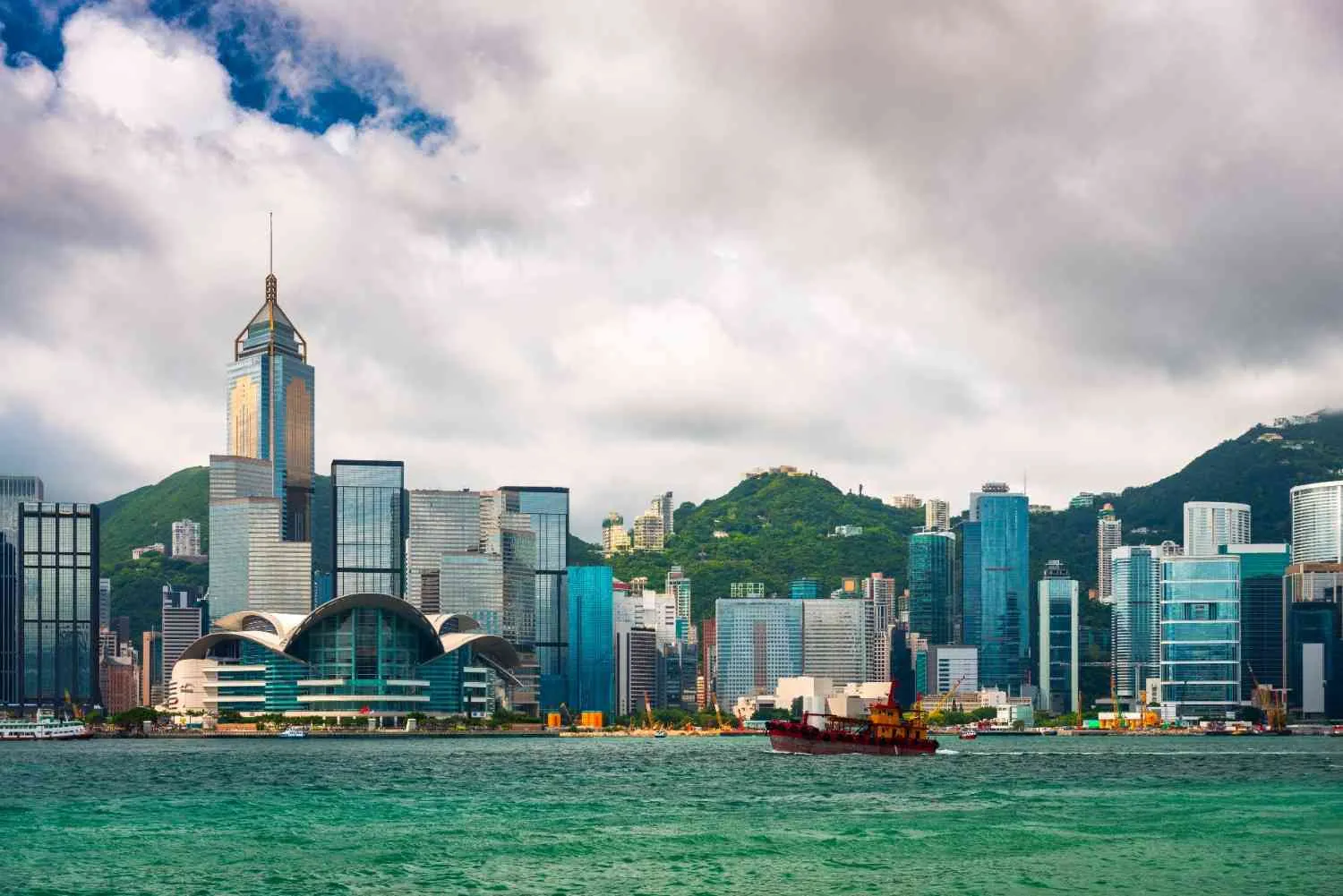
Opening a bank account in Hong Kong isn't just an item on your business launch checklist; it's a strategic move that plugs you directly into the financial heart of Asia. This isn’t about finding a place to park your funds. It’s about building a robust financial foundation in one of the world's most dynamic and stable ecosystems, creating a direct conduit to Mainland China and the broader APAC market.
Why Hong Kong Is Still a Strategic Banking Hub

Despite all the global economic chatter, Hong Kong's status as a top-tier financial centre remains unshaken. For entrepreneurs and SMEs with global ambitions, it’s less a location and more of a strategic asset. Think of it as installing a high-speed fiber optic line for your business's capital, trade, and expansion plans.
I've seen this exact scenario play out countless times. I recall working with the founder of a European e-commerce brand that was gaining serious traction. The problem? Managing payments from customers in Japan, Singapore, and Korea was an operational nightmare. She was losing a significant chunk of her margin to exorbitant currency conversion fees and frustratingly slow wire transfers.
Opening a corporate account in Hong Kong completely transformed her business. It became her central treasury for all Asian sales. Suddenly, she could hold multiple currencies, pay regional suppliers in their local currency, and reinvest profits directly into APAC marketing without watching it evaporate into FX fees. This isn't a rare success story; it's a fundamental strategy for any entrepreneur serious about scaling in Asia.
A Gateway to Unmatched Financial Opportunities
Hong Kong's unique position offers very tangible advantages for international businesses. Its free-port status means no customs tariffs, and the simple, low-tax system is legendary for being pro-business. But the real magic lies in its deep, seamless integration into the global financial system.
Here’s what truly matters for your business:
- Proximity to Mainland China: It remains the undisputed bridge for trade and investment flowing into and out of the world’s second-largest economy.
- Stable Legal Framework: The system is built on English common law, offering a predictable and secure environment for your operations. No unpleasant surprises.
- World-Class Infrastructure: The city’s banking sector is incredibly sophisticated. We're talking top-tier efficiency, robust security, and unparalleled global connectivity.
The banking sector is the very heart of Hong Kong’s economy. The latest figures show that over 53.1% of the city's economic deposits stem directly from banking activities. Furthermore, the balance of payments recently recorded a surplus of HK$105.5 billion, underscoring the immense financial inflow managed by its banks.
More Than an Account, It’s a Strategic Asset
A Hong Kong bank account is much more than a digital vault for your cash. It's a powerful tool that enhances your operational efficiency and broadcasts credibility to partners and clients across Asia. For an SME, that perception of stability and permanence is invaluable. It signals that you're not just testing the waters—you're committed to the region.
For global entrepreneurs, a Hong Kong bank account is a foundational piece of their international architecture. It's the financial backbone that supports expansion, simplifies cross-border transactions, and provides a stable platform in a volatile world.
To fully appreciate Hong Kong’s role, it’s helpful to understand the broader context of how to open an offshore company and bank account in other major financial hubs. It puts into perspective why Hong Kong so often emerges as the superior choice.
If you’re ready to explore this further, our detailed guide covers the many benefits of opening a Hong Kong bank account for international businesses.
Choosing the Right Bank for Your Business
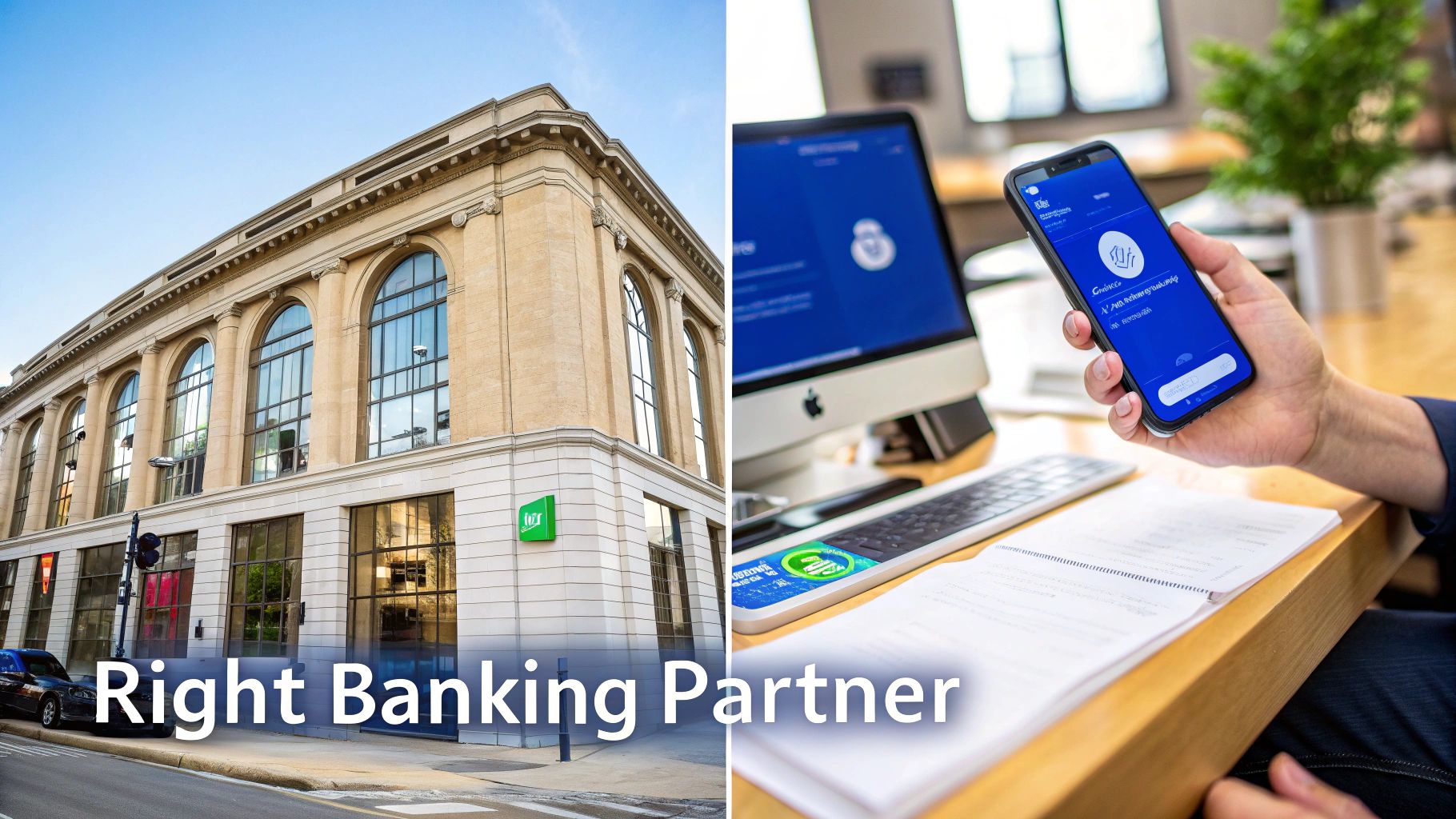
Navigating Hong Kong’s banking scene can feel like standing at a bustling financial crossroads. You have global giants on one corner, established local powerhouses on another, and a new wave of nimble digital banks popping up all over. The goal isn't just to find a vault for your money; it’s about choosing a financial partner that genuinely understands your business and its global potential. Make the right choice, and your bank becomes a true asset for growth.
The market is incredibly concentrated. In 2021, the top three banks commanded a staggering 62.47% of the sector's entire market share. To give you a sense of scale, HSBC, one of these behemoths, reported holding over HK$11.49 trillion in assets in early 2025. You can explore more data on Hong Kong's banking market structure on tradingeconomics.com.
What does this concentration mean for you? While these traditional players offer unmatched global reach, their sheer size can make them rigid and demanding, especially during the Hong Kong bank account opening process. This is precisely the gap that the city's innovative virtual banks are rushing to fill.
Traditional Banks: The Global Behemoths
For many international businesses, household names like HSBC, Standard Chartered, and Bank of China (Hong Kong) are the default choice, and for good reason. They offer deep expertise in international trade, comprehensive multi-currency accounts, and powerful networks for services like trade finance and complex cross-border payments.
If your business relies on intricate global supply chains or requires letters of credit, these institutions are often the only viable option. They've been lubricating the wheels of global commerce for centuries, and their infrastructure reflects that legacy.
However, this legacy comes with a healthy dose of bureaucracy. Their compliance checks are notoriously stringent, and the mountain of required paperwork can be intimidating. You'll often face high initial deposit requirements (think HK$50,000 or more) and be expected to demonstrate significant "business substance" before they'll even consider your application, particularly if you’re a non-resident.
Virtual Banks: The Agile Challengers
On the other side of the spectrum are Hong Kong's licensed virtual banks, such as ZA Bank and Airstar Bank. These digital-only players were launched to disrupt the status quo, offering a radically different banking experience. Their primary advantages are speed and accessibility.
Here’s what they bring to the table:
- Quick Onboarding: The entire application is online, and accounts can often be opened in a matter of days, not weeks or months.
- Lower Costs: Most feature zero or very low monthly fees and minimal initial deposit requirements.
- Slick Tech: Their apps and online platforms are modern, intuitive, and built for a mobile-first world.
This agility does come with limitations. Most virtual banks are laser-focused on the local Hong Kong market. They may lack the sophisticated international transfer systems or trade finance products that a growing global SME requires. They are a fantastic choice for a simple, locally-focused business but could fall short if you're managing suppliers across three continents.
To help you weigh your options, let's compare them side-by-side.
Traditional Banks vs Virtual Banks: A Comparison for SMEs
| Feature | Traditional Banks (e.g., HSBC, Standard Chartered) | Virtual Banks (e.g., ZA Bank, Airstar Bank) |
|---|---|---|
| Account Opening Process | In-person meeting usually required; extensive paperwork. Can take weeks to months. | Fully digital application; streamlined process. Can be completed in a few days. |
| Initial Deposit & Fees | Often requires high initial deposits (HK$50,000+); monthly maintenance fees are common. | Low to zero initial deposit; minimal or no monthly fees. |
| International Services | Comprehensive multi-currency accounts, trade finance, letters of credit, global transfer network. | Limited international transfer capabilities; focused primarily on HKD transactions. |
| Physical Presence | Extensive branch network for in-person support and cash services. | No physical branches; all services are handled through an app or online portal. |
| Technology & UX | Can have clunky legacy online portals; mobile apps are improving but may lag behind. | Modern, user-friendly mobile apps and a seamless digital experience. |
| Best For | SMEs with complex international trade needs, multi-currency operations, and a need for in-person services. | Startups, local SMEs, and entrepreneurs needing a fast, low-cost, and digitally-native banking solution. |
Ultimately, this isn't about one being "better" than the other. It's about finding the right fit for your specific business operations.
The best bank for your business isn't necessarily the biggest or the newest. It's the one whose services, risk appetite, and operational style align perfectly with your business model, transaction patterns, and growth trajectory.
Making the Right Choice for Your SME
So, how do you choose? Start by mapping out your core banking needs. Are you primarily invoicing local clients in HKD? A virtual bank is likely a perfect, low-cost solution. Do you need to pay suppliers in USD and EUR while receiving revenue in JPY? The multi-currency muscle of a traditional bank becomes non-negotiable.
From my experience advising international founders, a hybrid approach often works best. You could leverage a traditional bank for core international trade and treasury functions, and use a virtual bank or fintech platform for faster, day-to-day local spending.
Choosing a bank is a strategic decision that goes far beyond a fee comparison spreadsheet. You're seeking a partner that will not only approve your Hong Kong bank account opening but also support you as you scale. For a deeper dive, check out our guide on choosing the right Hong Kong bank for your business needs. It delves into specific bank comparisons and what to look for based on your industry.
Your Essential Documentation Checklist
There’s almost nothing more frustrating for an entrepreneur than receiving a rejection notice from a bank after weeks of radio silence. More often than not, the issue isn't the viability of your business model—it’s a simple, avoidable paperwork mistake. Think of this checklist as your pre-flight inspection before you even approach the bank. Nailing this from the start transforms a compliance hurdle into a compelling case for a long-term banking partnership.
This isn't just about ticking boxes. Each document helps paint a picture for the bank’s compliance team, telling the story of who you are, what your business does, and why you’re a client they can trust. From their perspective, every piece of paper is a tool to manage risk and fulfill their stringent Know Your Customer (KYC) and Anti-Money Laundering (AML) obligations.
The Core Corporate Documents
First, let's get the foundational paperwork for your company in order. These are the non-negotiables that prove your business is a legitimate, legally registered entity. Get these documents organized and, where necessary, certified before you do anything else.
- Certificate of Incorporation & Business Registration Certificate: These are the birth certificates of your company, proving it legally exists.
- Articles of Association (or equivalent): This document outlines your company's purpose, its internal governance, and the duties of its directors.
- Register of Directors and Shareholders: The bank needs a crystal-clear understanding of who owns and controls the company. If you have a complex ownership structure, be prepared for intense scrutiny here.
- Board Resolution: This is a formal, signed document from the company's directors authorizing the opening of the account and specifying who is empowered to operate it.
Having these files neatly organized and ready to present signals professionalism and seriousness. Fumbling for missing information at this stage is an immediate red flag.
Proving Who You Are: Personal Identification
Next, the bank needs to verify the identity of every key individual connected to the company. This includes all directors, any ultimate beneficial owners (UBOs) holding 10% or more of the company, and all authorized signatories. In essence, the bank wants to metaphorically shake hands with everyone who holds the keys to the business.
For each of these individuals, you'll almost certainly need:
- A Certified True Copy of a Valid Passport: The keyword here is "certified." This isn't a simple photocopy. It usually requires a lawyer, notary public, or Certified Public Accountant (CPA) to stamp and sign the copy, verifying it's a true likeness of the original.
- Proof of Residential Address: This must be a recent document, typically less than three months old. A utility bill, a formal bank statement, or a government-issued letter clearly showing the individual’s full name and home address will suffice.
Building Your Business Case: The Story Behind the Numbers
This is where you move beyond proving you exist to demonstrating you're a viable business worth banking with. Your application for a Hong Kong bank account opening is, in effect, a business pitch. You need to present a clear, logical, and compelling narrative.
Your business plan is the centerpiece. It shouldn’t be a 50-page epic. Instead, aim for a concise, professional document that clearly explains your business model, target customers, and revenue streams. Crucially, it must include realistic financial projections. The bank wants to see that you've thought through your cash flow and can justify the transaction volumes you're anticipating.
Banks aren't just looking for documents; they're looking for a coherent story. If your business plan says you're an e-commerce company selling to Japan, but your invoices show payments to a factory in Brazil, you need to connect those dots for them. Clarity is your greatest asset.
Beyond the plan itself, you must provide tangible "proof of business substance." This is the hard evidence that your company is a real, operating business and not just a paper-thin shell corporation.
Examples of powerful proof of substance include:
- Signed contracts or formal agreements with key clients or suppliers.
- Invoices you've issued to customers or received from vendors.
- A lease agreement for an office or warehouse—even a co-working space membership counts.
- A professional company website and corporate email addresses (not a generic Gmail account).
By preparing this documentation meticulously, you’re doing far more than satisfying a bureaucratic requirement. You're demonstrating credibility and foresight, making it significantly easier for the bank to say "yes."
The Bank Meeting: Your Time to Shine
With your documentation perfectly in order, it's time for the bank meeting. Whether you're sitting in a high-rise office overlooking Victoria Harbour or joining a video call, this is your moment to make your business real to the bankers. This isn't a simple box-ticking exercise; it's a fundamental part of their risk assessment. They need to see a founder who understands their business inside and out.
Think of it as a pitch for a long-term partnership. You must clearly articulate your business model, defend your projected transaction volumes, and make a compelling case for why your company requires a presence in Hong Kong. Have local suppliers? Bring those contracts. Targeting the APAC market? Show them your market research. Every claim you make should be reinforced by the documents you’ve so carefully prepared.
I’ve seen many founders make the mistake of treating this meeting like a simple ID check. The relationship manager is assessing your professionalism and the real-world viability of your business. Confidence, clarity, and a firm grasp of your own financials will make all the difference.
The In-Person Advantage
For the major players like HSBC or Standard Chartered, nothing beats an in-person meeting, especially for non-resident directors. There's a certain weight to a handshake and presenting your case face-to-face. It builds immediate trust and helps the banker connect a person to the application, which can often smooth the path to final approval.
Of course, a trip to Hong Kong isn't always feasible. Banks understand this and have started offering more flexible options, though they come with their own set of challenges.
Cracking the Code on Remote Account Opening
The demand for remote Hong Kong bank account opening has skyrocketed, but it’s far from guaranteed. While the new virtual banks are built for this model, many traditional banks remain cautious. They typically reserve remote onboarding for businesses with straightforward structures or those introduced by a professional services firm they already trust.
A key enabler here is the growing acceptance of digital verification. For instance, remote online notary services are becoming essential for certifying your documents without being physically present.
If you pursue the remote route, here's what to expect:
- Video Verification: Prepare for a detailed video call where you'll need to hold up your original passport and other identity documents to the camera for inspection.
- Extra Scrutiny: To compensate for the lack of a physical meeting, banks will almost certainly request more supporting documents.
- A Lesson in Patience: The remote process can take longer as your file moves between various departments for verification.
The banking environment is constantly evolving. For example, total bank deposits in Hong Kong grew by 7.6% in the first half of 2025. However, zooming in on June 2025 reveals a 0.9% dip in Hong Kong dollar deposits while foreign currency holdings rose by 2.4%. This kind of fluctuation, detailed in depositor trend data from the HKMA, makes banks more meticulous when vetting new clients.
For international founders, navigating these remote procedures alone is challenging. Each bank has its own unwritten rules. To get a better handle on this, explore our deep dive into remote bank account opening services in Hong Kong, where we break down modern strategies for tackling this very challenge.
Common Mistakes and How to Avoid Them
Securing a Hong Kong bank account opening can feel like a high-stakes game. One misstep can send you back to square one with a rejection letter. Or worse, you get the account, only to have it frozen a few months later. Many founders are so focused on the finish line that they completely overlook the red flags that bankers are trained to spot from a mile away.
The secret is to think like a banker. Understanding what they perceive as risk is your best strategy for a smooth application and, just as importantly, a stable, long-term banking relationship.
One of the most common pitfalls I see is a business plan that's all vision and no substance. Bankers review these all day. If your plan is vague on your revenue model, customer base, or projected transaction patterns, it screams "risk." They aren't just ticking boxes; they're trying to determine if you're a legitimate business or a compliance nightmare in the making. If they can't get a clear picture, the answer will almost always be no.
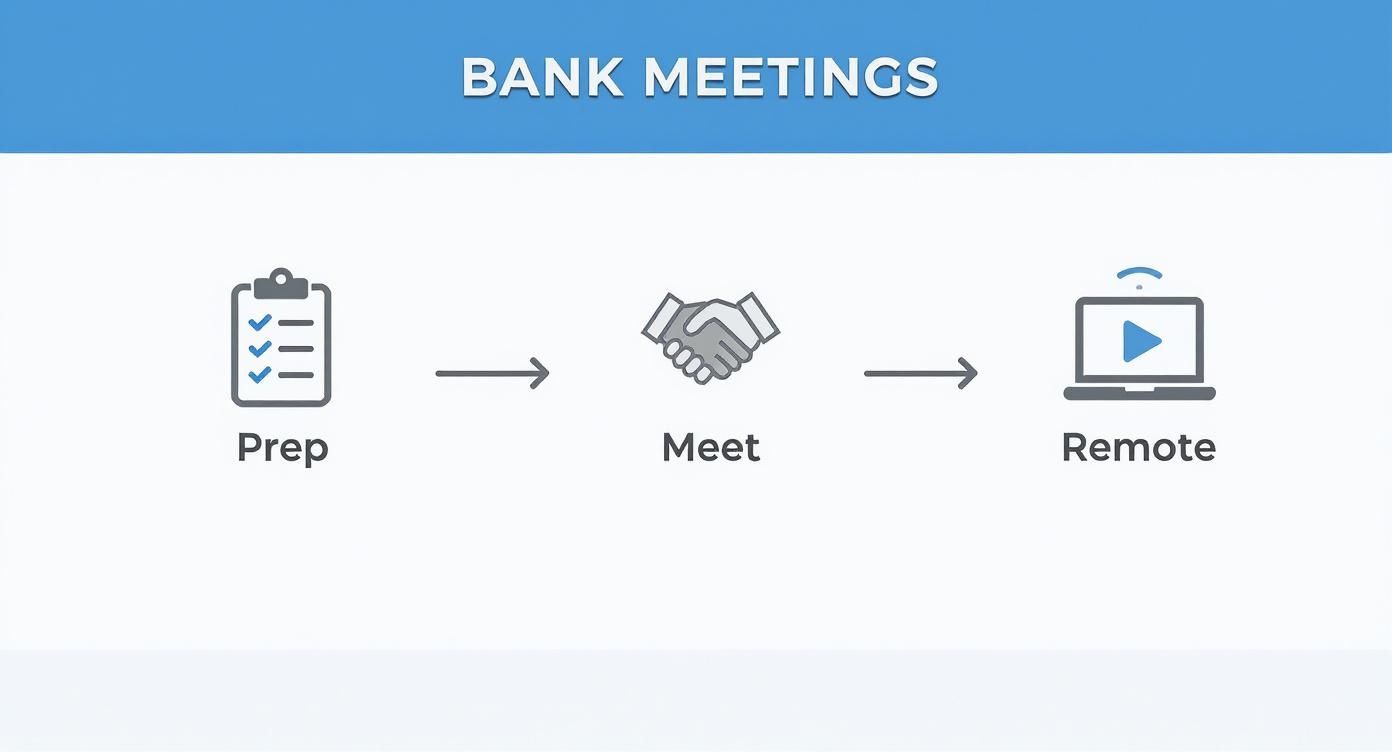
As you can see, every stage of your interaction with the bank matters—from the prep work you do beforehand to the meeting itself. Don't underestimate any part of it.
Lacking Provable Business Substance
This is a major deal-breaker. Hong Kong banks are under immense regulatory pressure to clamp down on shell companies. Your Certificate of Incorporation is merely the starting point; it doesn't automatically grant you an account. You must prove you are running a real, operational business that has a genuine need to bank in Hong Kong.
What does that look like in practice? It means showing your cards. Provide signed client contracts, supplier invoices, a link to your professional website, or even a lease for a desk at a co-working space. Anything that builds a tangible picture of a legitimate operation. Without this evidence, you look like a gamble, and banks are not in the business of taking chances.
A common misconception is that a Hong Kong company registration automatically entitles you to a bank account. In reality, the company is just the key; you still have to convince the bank to open the door by proving your business is legitimate and transparent.
Overlooking Your Corporate Structure
An overly complex ownership structure is another significant red flag. If your company is owned by a tangled web of other entities across multiple jurisdictions—especially high-risk ones—expect a thorough grilling. From the bank’s perspective, each layer adds opacity and makes their anti-money laundering (AML) and know-your-customer (KYC) checks exponentially more difficult.
So, how do you steer clear of these common rejection triggers?
- Simplify Your Story: Craft a business plan that is crystal clear. Explain what you do, why you need a presence in Hong Kong, and the types of payments you'll be making and receiving.
- Bring the Receipts: Don’t wait to be asked. Get all your proof of business substance—contracts, invoices, marketing materials—organized and ready from day one.
- Be an Open Book: If you have a complex ownership structure, don’t try to obscure it. Draw up a clear chart showing the entire chain up to the ultimate beneficial owners (UBOs). Transparency builds trust.
Why Applications Get Rejected and How to Fix It
Let's break down the most frequent reasons applications are denied and what you can do proactively. Seeing it from the bank's perspective is half the battle.
| Reason for Rejection | Why It's a Red Flag for Banks | How to Mitigate the Risk |
|---|---|---|
| Vague Business Plan | The bank can't understand your revenue model or transaction flow, raising AML and compliance concerns. | Create a detailed plan with financial projections. Clearly state your connection to Hong Kong and the purpose of the account. |
| No "Business Substance" | Your company looks like a shell corporation set up for tax avoidance or other illicit activities. | Provide proof of operations: signed contracts, supplier invoices, a professional website, and a physical (even co-working) address. |
| High-Risk Industry | Your business is in a sector flagged for money laundering risk (e.g., crypto, gambling, money services). | Be prepared for extra scrutiny. Provide robust internal AML policies and demonstrate a clear, legitimate business model. |
| Complex Corporate Structure | Opaque ownership makes it difficult for the bank to identify the ultimate beneficial owners (UBOs), a key KYC requirement. | Provide a clear organisational chart. Be upfront about all owners and their sources of wealth. Simplify if possible. |
| Inconsistent Information | Discrepancies between your application, supporting documents, and interview answers erode trust and suggest deception. | Double-check every document for consistency. Ensure all directors and shareholders are aligned on the business narrative. |
| Poor Interview Performance | The applicant appears unprepared, evasive, or unable to answer basic questions about their own business. | Prepare thoroughly for the bank meeting. Rehearse your answers and be ready to explain every aspect of your business operations. |
Getting the account is just the beginning. The last thing you want is for the bank to pull the plug right when your business is gaining momentum.
Maintaining a Healthy Account Post-Approval
Don't celebrate too early. Keeping your account active and in good standing is an ongoing commitment. Banks use sophisticated monitoring systems, and any activity that deviates from the narrative you provided in your application will trigger an alarm.
For instance, if you stated you're a software consultant and your account suddenly starts receiving large, unexplained wire transfers from a commodities trader, expect a swift account freeze. The golden rule is simple: communicate. If you're anticipating an unusually large transaction or a payment from a new region, give your relationship manager a proactive heads-up. It prevents panic on their end and a potential operational disaster on yours.
Answering Your Top Banking Questions
Opening a bank account in Hong Kong is one of the biggest hurdles for international founders. There's a lot of conflicting information out there, and the requirements seem to be constantly shifting.
Let’s cut through the noise. Here are direct answers to the most common questions we get from entrepreneurs trying to establish their financial base in the city.
How Long Does It Typically Take to Open a Business Bank Account in Hong Kong?
This is the million-dollar question, and the honest answer is: it depends entirely on the bank and your company’s profile. The timeline has become a major differentiator between banking institutions.
With a virtual bank, things can move surprisingly fast. If you have a straightforward business model and all your documents are perfectly prepared, you could be approved in just a few days. They are designed for digital-first businesses.
For the large traditional banks like HSBC or Standard Chartered, however, you need to play the long game, especially as a non-resident. You should realistically budget for 4 to 12 weeks. This period covers their deep-dive due diligence, comprehensive KYC checks, and scheduling that crucial face-to-face meeting.
My Two Cents: Don't wait until you're desperate for an account to begin the process. Initiate the application months before you actually need it. This buffer is the single best way to avoid cash flow nightmares and operational delays.
What Are the Typical Costs Involved?
View opening a corporate account in Hong Kong as an investment, not merely an administrative task. It’s crucial to budget for several distinct costs to avoid any unpleasant surprises.
Here's a realistic breakdown of what you can expect to pay:
- Bank Setup Fee: A one-time, non-refundable charge for processing your application. This usually ranges from HK$1,000 to HK$12,000, depending on the bank and the complexity of your application.
- Initial Deposit: This isn't a fee, but it’s capital that will be locked for a period. Most banks require an initial deposit of anywhere from HK$10,000 to HK$50,000 or more.
- Professional Assistance: If you engage a firm to handle the paperwork and introductions, expect fees starting from HK$5,000. This typically covers document review, bank matching, and application support.
- Hidden Costs: Don't forget the smaller expenses. You’ll likely need to pay for document certification (CPA or notary fees) or translation of paperwork into English or Chinese.
Can I Open a Hong Kong Bank Account as a Non-Resident?
Yes, it is still possible, but it's a completely different landscape now. It is undeniably more challenging for non-residents than it was a few years ago, as banks are under immense pressure from global regulators.
To have a strong chance, your application must be flawless. This means perfect documentation, a compelling business plan, and—most importantly—a crystal-clear reason for banking in Hong Kong. This "nexus" could be local customers, key suppliers in the region, or a detailed plan for APAC expansion headquartered in the city.
While many banks still prefer at least one director to fly in for a meeting, video verification is becoming more common, though it’s typically reserved for the most compelling applications.
What Are My Options If My Bank Application Is Rejected?
Receiving a "no" from a traditional bank isn't the end of the road. It’s a signal to pivot your strategy. The first step is to politely request feedback—sometimes the bank will provide a reason, which is invaluable intelligence.
Your next move should be to explore Hong Kong’s licensed virtual banks. Their risk appetite is often different, and they tend to be more comfortable with modern, digital business models.
If that doesn't work, or if you need multi-currency accounts immediately, modern payment platforms are your best alternative. Services like Airwallex, Statrys, or WorldFirst are excellent solutions. They provide dedicated account details (like an IBAN) and multi-currency wallets, with an onboarding process that is a world away from traditional banks. For many international businesses, they are no longer just a backup plan; they are the primary solution.
Conclusion
At Lion Business Consultancy Limited, we transform these complex banking challenges into clear, actionable strategies. We do more than just facilitate an account opening; we act as your dedicated financial manager, ensuring your setup is compliant, secure, and perfectly aligned with your global ambitions. If you’re seeking a partner who can guarantee results and shield your business from compliance risks, we should have a conversation.