

 Hong Kong



 Singapore



 UAE
UAE



 Malaysia


 Turkey


 UK
UK
 EU
EU
 US
US
 Switzerland
 Bahamas Bank Account
 Cayman Islands Bank Account
 Mauritius Bank Account

 BVI
BVI
 Seychelles

When you're signing a tenancy agreement for your business, there's a final, crucial step that gives it real legal power: paying stamp duty. This isn't just another administrative fee; it's a government tax on the lease document itself. Think of it as the official seal that transforms your agreement from a simple piece of paper into a legally enforceable instrument. In short, paying stamp duty is what gives your lease legal teeth, ensuring it holds up in court if a dispute ever arises between you and your landlord. The amount you'll pay is usually tied directly to the rent and the length of your lease.
What Is Stamp Duty and Why It Matters for Your Business
Imagine you've just secured the perfect lease for your new office. The terms are fantastic, the location is a dream, and your team is ready to hit the ground running. But what if one small, often-overlooked step could render that entire agreement powerless in a legal dispute? That step is paying the stamp duty for your tenancy agreement.
It’s easy to dismiss stamp duty as just another box-ticking exercise, but that’s a dangerous misunderstanding. It’s less of a tax and more of an official validation. Paying stamp duty is like getting a passport for your lease; without that stamp, your document can't legally "travel" into a courtroom to be recognised or enforced.
In simple terms, an unstamped tenancy agreement is often inadmissible as evidence in court. This means if you need to take legal action against your landlord for a breach of contract, or they need to sue you for unpaid rent, a judge may refuse to even look at the lease.
Before we dive deeper, let's quickly summarise the key points about stamp duty for tenancy agreements.
Stamp Duty for Tenancy Agreement At a Glance
| Aspect | Brief Explanation | Why It Matters for Your Business |
|---|---|---|
| Legal Validity | It's a government tax that legally validates your lease document. | An unstamped agreement is often inadmissible in court, leaving you unprotected. |
| Enforceability | The "stamp" proves the duty has been paid, making the contract's terms enforceable. | You can confidently rely on the lease terms to resolve disputes over rent, repairs, or other obligations. |
| Calculation Basis | The amount is typically calculated based on the rental amount and the lease duration. | Understanding the calculation helps you budget accurately for tenancy costs and avoid surprises. |
| Compliance | Paying stamp duty is a legal requirement with strict deadlines and penalties for late payment. | Timely payment avoids hefty fines and ensures your legal protections are in place from day one. |
This table provides a high-level overview, but understanding the core purpose behind this process is key to appreciating its importance for your business operations.
The Core Purpose of Stamping Your Lease
So, why does this matter so much for your business? The consequences of not stamping your lease go far beyond a simple fine—it directly impacts your operational security and legal standing. To get a broader sense of where this fits into property taxes, you can explore this helpful guide explaining What is Stamp Duty Land Tax (SDLT).
Here’s a breakdown of what stamping your lease actually accomplishes:
- Legal Validity: It transforms a simple written contract into a legally binding document that the courts will recognise and uphold.
- Dispute Resolution: It’s your insurance policy. If disagreements arise, you can confidently rely on the terms of your lease in any legal proceedings.
- Government Revenue: On a broader level, it's a form of revenue collection for the government, much like other property-related taxes. To see how this fits into the bigger picture, especially in Hong Kong, our article on property tax in Hong Kong covers other critical financial duties.
In a place like Hong Kong, the rules are crystal clear and strictly enforced. For instance, on a lease that runs for more than one year but not more than three, the rate is 0.5% of the average annual rent. This kind of structured approach leaves no room for ambiguity, ensuring everyone knows their obligations from the outset. Forgetting to pay it isn't just a minor slip-up; it's a significant business risk.
Comparing Stamp Duty Rules Across Borders
As an entrepreneur, expanding your operations across different cities is often part of the game. But property rules are intensely local. What’s standard practice in one financial hub can be a costly oversight in another, and the rules around stamp duty for tenancy agreements are a classic example of this.
It's a mistake to think this tax is a simple, uniform charge. The rates, the calculation methods, and even who foots the bill can change dramatically from one country to the next. For any SME managing properties in places like Hong Kong, Singapore, and the UK, assuming the process is the same everywhere is a risk you can't afford to take. These aren't just minor details—they're critical compliance points that directly impact your budget and legal standing.
Let's break down how these key markets handle this crucial requirement.
This infographic lays out the essentials of stamp duty: why it exists, who usually pays, and the consequences of getting it wrong.
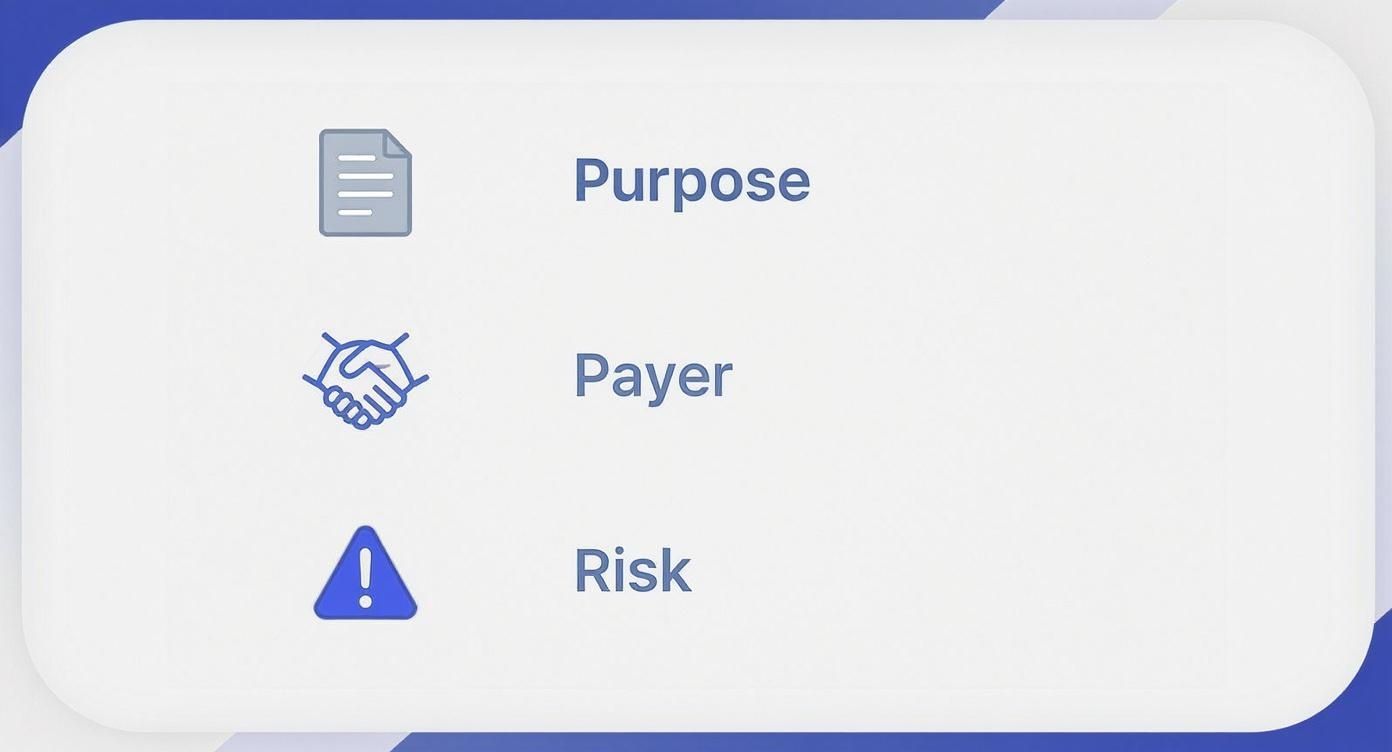
As you can see, the core purpose is always to make the agreement legally enforceable. The shared responsibility and the very real risk of a void contract are universal concerns, no matter where you're signing a lease.
Hong Kong: A Model of Clarity
Hong Kong is famous for its efficient, no-nonsense business environment, and its approach to stamp duty on leases is no different. The system is refreshingly straightforward, with rates tiered based on the length of the lease. Simple.
This clarity removes the guesswork, making it easy for businesses to calculate what they owe and budget for it. A standard two-year commercial lease, for instance, fits neatly into a specific rate bracket.
Responsibility is also crystal clear: it’s almost always split 50/50 between the landlord and the tenant. This shared-cost model is a standard feature in most tenancy agreements here. Just be mindful of the timeline—payment is due within a strict 30 days of signing. To get a fuller picture of property-related finances, our guide on property tax in Hong Kong covers other key obligations.
Singapore: The Tenant-Centric Approach
Over in Singapore, the system takes a different turn. While the duty is still calculated based on the rent and lease term, the responsibility for paying it usually lands squarely on the tenant. This is a critical point for any company leasing commercial space in the Lion City.
Unlike Hong Kong’s shared model, as a tenant in Singapore you need to be ready to cover the entire stamp duty cost. It’s an upfront expense that must be factored into the initial budget when setting up a new office or shop.
The deadline in Singapore is even tighter. If the agreement is signed locally, you have just 14 days to pay the stamp duty. If signed overseas for a Singapore property, you get 30 days after it arrives in Singapore.
Missing these deadlines invites hefty penalties, often multiples of the original duty owed, so prompt payment is non-negotiable. This means having funds ready and a process in place to get it paid the moment the lease is signed.
The United Kingdom: A Different Calculation
Hop over to the UK, and you'll find a completely different system for commercial leases. Here, it’s not called stamp duty but Stamp Duty Land Tax (SDLT), and the calculation is far more complex. It's based on the Net Present Value (NPV) of the total rent you'll pay over the entire life of the lease.
This NPV-based method requires a more involved calculation than the simpler rent-based models in Asia. The tax is applied in bands, so different portions of the NPV are taxed at different rates.
A few key distinctions in the UK:
- Thresholds: SDLT only kicks in if the NPV of the rent is over a certain threshold (currently £150,000 for non-residential leases). Many smaller leases fall below this, meaning no tax is due.
- Payer: Much like in Singapore, the tenant is typically responsible for paying the SDLT.
- Deadline: You must file an SDLT return and pay the tax within 14 days of the "effective date" of the lease, which is usually the day it’s completed.
This means that while some smaller leases are exempt, larger, long-term commercial leases can trigger significant SDLT charges that businesses must calculate with care.
Stamp Duty Comparison Across Key Jurisdictions
To put it all into perspective, here’s a side-by-side look at how these three major business hubs handle stamp duty for tenancy agreements. The differences are stark and highlight why a one-size-fits-all approach is bound to fail.
| Jurisdiction | Calculation Basis | Typical Payer | Payment Deadline |
|---|---|---|---|
| Hong Kong | Percentage of annual or average annual rent, tiered by lease term | Landlord & Tenant (50/50) | 30 days from signing |
| Singapore | Percentage of average annual rent, tiered by lease term | Tenant | 14 days from signing (if in SG), 30 days after receipt in SG (if signed overseas) |
| UK | Net Present Value (NPV) of total rent over the lease term | Tenant | 14 days from the lease's effective date |
As the table shows, from the calculation method to who pays and when, the obligations for a business leasing property vary significantly. Being aware of these local nuances isn't just good practice—it's essential for staying compliant and managing your costs effectively.
How to Calculate Stamp Duty Correctly
Alright, let's move from the 'what' to the 'how' and get our hands dirty with the numbers. Getting the stamp duty for a tenancy agreement wrong is a surprisingly common slip-up for SMEs, but it’s one you can easily avoid. Once you know the formula, you can budget with confidence and make sure you’re not paying a pound more—or less—than you owe.
Think of it like mixing a cocktail. You wouldn't just eyeball the ingredients and hope for the best. You follow a recipe—so much of this, a dash of that—to get a perfect result every time. Calculating stamp duty is the same; it's a straightforward formula based on a few key ingredients.
We'll use Hong Kong's system as our main example because its clarity is perfect for illustration. All you need to know are three things: the monthly rent, how long the lease is, and the correct tax rate to apply.

Key Components of the Calculation
Before we jump into the examples, let's define the two crucial terms that drive the entire calculation. It all boils down to these:
- Assessable Rent: This is just a formal way of saying the total rent you'll pay over the life of the lease. For most agreements, it's simply the monthly rent multiplied by the number of months.
- Applicable Rate: This is the percentage set by the government, and it changes based on the length of your lease. Shorter leases get a lower rate, while longer-term commitments are taxed at a higher one.
Once you have these two figures, the rest is simple multiplication.
Example 1: The One-Year Startup Lease
Let’s kick off with a classic scenario: a small startup signs a one-year lease for its first office. It's a typical move for a business testing the waters.
- Monthly Rent: HK$20,000
- Lease Term: 12 months
- Applicable Rate (for leases ≤ 1 year): 0.25%
First, you need to work out the total rent for the year.
Calculation:
HK$20,000 (monthly rent) x 12 (months) = HK$240,000 (total annual rent)
Now, just apply the 0.25% rate to that total.
Calculation:
HK$240,000 x 0.0025 (0.25%) = HK$600
That's it. The total stamp duty is HK$600. In Hong Kong, this cost is usually split 50/50 between the landlord and tenant, so each would pay HK$300.
Example 2: The Standard Two-Year Commercial Lease
Okay, let's scale up. Imagine a more established SME signing a standard two-year lease for a bigger commercial space. This shows they're confident and ready to commit.
- Monthly Rent: HK$50,000
- Lease Term: 24 months
- Applicable Rate (for leases > 1 year but ≤ 3 years): 0.5%
Because this lease is longer than a year, the rules change slightly. The calculation is based on the average annual rent. With a fixed monthly rent, this is simply the rent for one year.
Calculation:
HK$50,000 (monthly rent) x 12 (months) = HK$600,000 (average annual rent)
Next, apply the higher 0.5% rate for a longer lease.
Calculation:
HK$600,000 x 0.005 (0.5%) = HK$3,000
The total stamp duty comes to HK$3,000, meaning the landlord and tenant would typically chip in HK$1,500 each.
Important Note: There's also a small administrative fee of HK$5 for each copy of the stamped agreement. It's a minor cost, but remember to add it on top of the final duty.
Example 3: The Long-Term Four-Year Lease
Finally, let's look at a major commitment. A large, stable company might sign a four-year lease to lock down a prime location for the long haul.
- Monthly Rent: HK$80,000
- Lease Term: 48 months
- Applicable Rate (for leases > 3 years): 1%
Just like our last example, we start by finding the average annual rent.
Calculation:
HK$80,000 (monthly rent) x 12 = HK$960,000 (average annual rent)
And now, we apply the highest rate for long-term leases.
Calculation:
HK$960,000 x 0.01 (1%) = HK$9,600
The total stamp duty here is a more substantial HK$9,600. As you can see, the stamp duty for a tenancy agreement scales predictably with both the rent and the lease term, making it a straightforward expense to factor into your property budget.
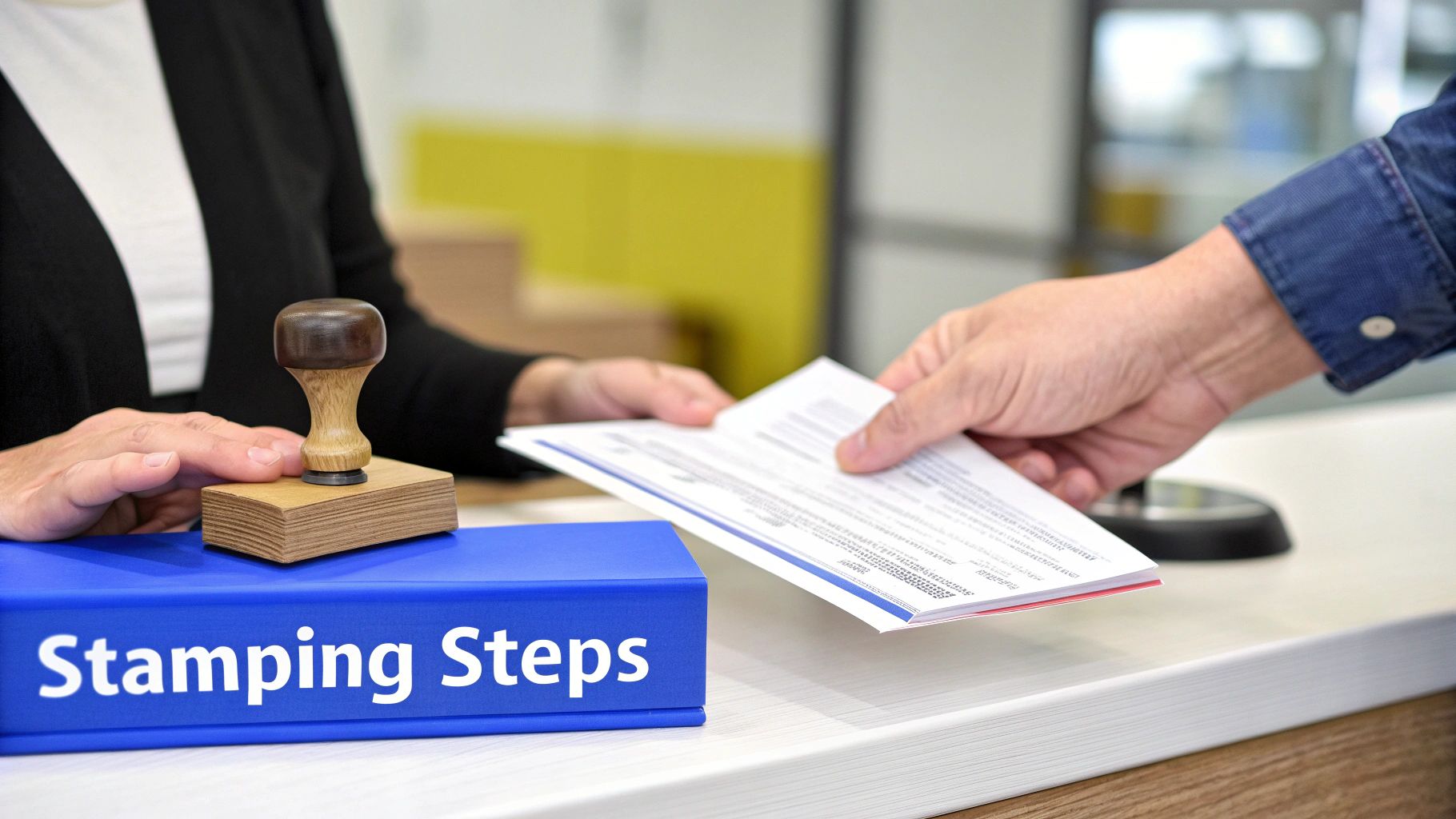
The Stamping Process From Start to Finish
You’ve calculated the right stamp duty for your tenancy agreement, which is a great start, but it’s really just the first step. Now comes the critical part: navigating the actual stamping process. Think of it as the final, official checkpoint that gives your lease its legal muscle. Getting this wrong can be an expensive mistake.
This isn't just about filling out a form and sending a payment. It's a formal, time-sensitive procedure that demands attention to detail. A minor error or a missed deadline can cause major headaches down the line, potentially leaving your agreement unenforceable when you need it most. Let's walk through exactly how it works, so you can make sure your lease is locked down and legally sound.
Preparing and Submitting Your Agreement
First things first, you need to get the tenancy agreement ready for submission. The document must be finalised and signed by both the landlord and the tenant. The stamping process is what formalises this signed contract. In Hong Kong, for example, you'll need at least two original copies—one for each party—as both will get stamped.
When it comes to submitting the document, you’ve got a few options:
- Online Portals: Most tax authorities now have digital portals. This is usually the quickest and easiest route, letting you upload a digital copy and get an electronic stamp certificate in return.
- In-Person Services: You can always go the traditional route and take your signed agreements directly to a designated Stamp Office. This is great if you prefer dealing with official matters face-to-face and getting immediate confirmation.
- Mail Submissions: Posting your documents is also an option, but be warned—it's the slowest method. If you go this route, make sure you track your package to ensure it arrives before the deadline.
The key takeaway here is to act fast. The clock on your deadline starts ticking the moment the agreement is signed, not when you get around to filing.
Payment Methods and Critical Deadlines
With your agreement submitted, payment is the next immediate hurdle. Most authorities are flexible, offering several ways to pay, such as online bank transfers, credit card payments through their portal, or paying directly at the counter.
But the most crucial part of this stage is the deadline. In Hong Kong, a tenancy agreement must be stamped within 30 days of being signed. This isn't a guideline; it's a non-negotiable rule.
Missing that deadline is where things get serious. Late stamping can trigger penalties of up to 10 times the original duty you owed. That’s a massive price to pay for a simple administrative slip-up.
This penalty structure is there for a reason—to enforce compliance. Tax authorities are rarely lenient, and claiming you forgot or didn't know the rules won't get you very far.
The Consequences of Non-Compliance
The hefty fines are only the beginning. An unstamped tenancy agreement carries a much more significant risk: it can't be used as evidence in court. Imagine your landlord fails to make critical repairs or your tenant stops paying rent. If your agreement isn't stamped, you can't present it in a legal dispute to enforce your rights.
Suddenly, that carefully worded contract is legally powerless, leaving you exposed and without recourse. Paying the small stamp duty fee is essentially your insurance policy against this kind of disaster. It secures your investment and solidifies your legal standing. For context on how other jurisdictions handle rental validation, you might want to look into Ejari, Dubai's mandatory rental contract system, which serves a similar official registration purpose.
Uncovering Common Exemptions and Reliefs
While paying stamp duty on a tenancy agreement is a standard part of the leasing process, what if you didn't have to pay the full amount? Or anything at all? Many businesses just assume the standard rates apply across the board, but that's a costly mistake. Several specific situations can slash your stamp duty bill, sometimes even down to zero.
Knowing about these reliefs isn’t about finding a sneaky loophole. It's simply good financial sense. Governments often create these exemptions to support specific organisations or housing goals. Not checking if you qualify is like turning down free money—something no smart business owner would do.
So, before you sign off on the budget for that new lease, it's worth taking a moment to see if your agreement fits into one of these special categories. A little bit of homework here could save you thousands, freeing up cash you can put right back into growing your business.
Identifying Potential Exemptions
Most exemptions are there to support the public good. The exact rules change depending on where you are, but they usually focus on who the tenant is or the type of property involved. Think of them as a financial nod from the government to organisations doing valuable work in the community.
Here are a few common scenarios where your tenancy agreement might get a pass on stamp duty:
- Charitable Organisations: Leases signed by registered charities or non-profits are often exempt. The thinking here is straightforward: governments don't want to add financial pressure to groups providing vital community services. You’ll just need to have your official registration documents ready to prove your status.
- Government-Subsidised Properties: Sometimes, if you're leasing a property that's part of a government housing scheme or a subsidised development, you might catch a break with lower stamp duty rates. It’s a way to encourage more involvement in these kinds of property initiatives.
- Diplomatic or Consular Missions: Thanks to international agreements, leases for properties used by foreign embassies or consulates are typically exempt from these duties. This all comes down to diplomatic reciprocity.
Key Insight: Exemptions are never a given. You have to actively claim them and back it up with the right paperwork when you get your lease stamped. If you don't, you'll end up paying the full standard rate.
How to Claim Relief for Your Lease
Think your tenancy agreement qualifies for an exemption? Great, but you need to be proactive. You can't just decide to pay less and hope nobody notices. There’s a formal process to follow to get the relief officially approved.
First things first, get your documents in order. If you’re a charity, that means having your official registration certificate handy. If the property is linked to a government scheme, you might need a letter or certificate from the housing authority.
Then, when you submit your lease for stamping—whether you do it online or in person—you have to include an application or declaration for the exemption. This tells the tax authorities you're requesting special treatment under a specific part of the law. Just be ready for them to take a close look at your claim. They'll need to verify everything before they grant the relief and stamp your document.
Your Final Stamp Duty Compliance Checklist
Navigating a lease agreement can feel like you’ve already run a marathon. But there's one final lap that truly matters: getting the stamp duty for your tenancy agreement sorted. Skipping this step is like building a beautiful new office but forgetting to install locks on the doors—it leaves you unnecessarily exposed.
To make sure nothing gets missed, we’ve put together a practical checklist. Think of it as your pre-flight check before your tenancy officially takes off. Whether you're a landlord securing your investment or a tenant protecting your rights, this will help you tick every box.
For Landlords and Tenants
Before anything gets filed, both parties should run through these initial checks together. Getting on the same page now prevents headaches later.
- Verify All Details: Go over the tenancy agreement with a fine-tooth comb. Are the names, addresses, rental amounts, and lease dates exactly right? A small typo now can cause a big validation headache later.
- Agree on Payment Responsibility: Local custom often points to who pays (like the 50/50 split in Hong Kong), but don't leave it to chance. The lease should state clearly who is responsible for paying the stamp duty to avoid any "I thought you were handling it" moments.
- Calculate the Duty Owed: Use the formulas we’ve covered to work out the exact amount due. Both sides should agree on the final number before moving forward. Transparency is key.
The Stamping Process Checklist
Once the agreement is signed, it's time to make it official. These next steps will guide you through getting the lease stamped, turning it into a legally enforceable document.
- Prepare a Timeline: The clock starts ticking as soon as the lease is signed. Mark the deadline (e.g., 30 days in Hong Kong) in your calendar and work backwards to give yourself a comfortable buffer.
- Choose Your Submission Method: Decide how you'll handle it. Will you use the government's online portal, visit a Stamp Office in person, or send it by post? For speed and convenience, online is almost always your best bet.
- Submit and Pay on Time: Get the documents submitted and the payment made well before the deadline hits. Late payments attract penalties that can be several times the original duty owed.
- Obtain and Store the Stamped Document: After payment, you'll receive a stamped copy of the agreement or a stamp certificate. This is your proof of compliance. Keep it safe. A digital copy in a secure cloud folder and a physical copy with your other important legal documents is a smart move. It's also helpful to see how this fits with other key dates, which you can learn more about in our guide to the tax year in Hong Kong.
Red Flag Warning: If your lease has complex clauses—like variable rent, options to renew, or cross-border elements—that’s a clear sign a standard calculation won't cut it. This is the time to pause and get professional advice to avoid a costly miscalculation.
Your Stamp Duty Questions, Answered
Even with a solid plan, the nitty-gritty of stamp duty for a tenancy agreement can throw up some tricky questions. Over the years, we've seen business owners run into the same handful of challenges, especially when a lease needs to change or it's not clear who's responsible for what.
To save you some guesswork, we’ve put together answers to the most common queries we get. Think of this as your field guide for handling those "what if" moments that inevitably pop up. Getting these details right from the start keeps your lease a rock-solid asset for your business.
What Happens If the Rent Changes Mid-Lease?
This happens all the time in business. Perhaps you've negotiated a rent reduction to get through a tough quarter, or maybe you've agreed to a rent hike in return for some much-needed upgrades to the space. So, what does a mid-lease rent change mean for your stamped agreement?
Any time the rent changes in a meaningful way, you need to revisit the stamp duty. If the rent goes up, you’ll almost certainly have to calculate and pay the extra duty on the new, higher amount. This is usually handled by drafting a quick addendum or a supplementary agreement to the original lease, which then needs to be stamped itself.
It's crucial to get this right. If you skip this step, the new rent amount might not be legally enforceable. Imagine trying to rely on that rent reduction in a dispute, only to find the court won't recognise the unstamped addendum. The original, higher rent could be deemed the only legally binding one.
Failing to update the stamping is a small oversight that can create a huge legal headache down the road.
Who Is Legally on the Hook If the Stamp Duty Isn’t Paid?
This is probably the most important question of all, because the fallout from non-payment can be severe. While it’s common practice in places like Hong Kong to split the cost 50/50, the law sees it differently. Legally, both the landlord and the tenant are jointly and severally liable.
What does that mean in plain English? The tax authority doesn't really care who was supposed to pay. If the duty is overdue, they have the right to chase either one of you for the full amount, plus any penalties that have stacked up.
This is a massive risk for any business owner. You could have paid your share to an agent or the landlord, trusting them to take care of the paperwork. But if they drop the ball, you're still completely liable. This is why you should never just take someone's word for it—always insist on seeing the official stamp certificate or the physically stamped document as proof.
Do the Rules Change for Commercial vs. Residential Leases?
Yes, they often do. The core idea is the same—stamping makes the agreement official—but the details can vary quite a bit. The main differences usually come down to the rates and any available exemptions.
- Different Rates: Many jurisdictions have different duty rates or calculation tiers for commercial properties. This just reflects the different economic realities of a business lease compared to a personal one.
- Exemptions and Reliefs: You'll often find reliefs for residential tenancies, like for social housing, that simply don't exist for commercial leases.
- Lease Complexity: Business leases are often beasts. They can include clauses on turnover-based rent, hefty service charges, or complex renewal options, all of which can complicate the stamp duty calculation.
As a business owner, you have to be sure you're using the right set of rules. Applying residential logic to a commercial stamp duty for a tenancy agreement is a classic mistake that leads to underpayment and compliance trouble. Always double-check that you're following the specific guidelines for commercial property in your jurisdiction.
Sorting out stamp duty is just one piece of a much larger international puzzle. At Lion Business Consultancy Limited, we provide the strategic guidance needed to ensure your entire business structure is compliant, protected, and geared for growth. If you're looking for a partner to manage your global expansion with precision and foresight, explore our private advisory services.