
 Hong Kong
 Singapore
 UAE
UAE
 Malaysia
 Turkey
 UK
UK
 EU
EU
 US
US
 Switzerland
 Bahamas Bank Account
 Cayman Islands Bank Account
 Mauritius Bank Account
 BVI
BVI
 Seychelles
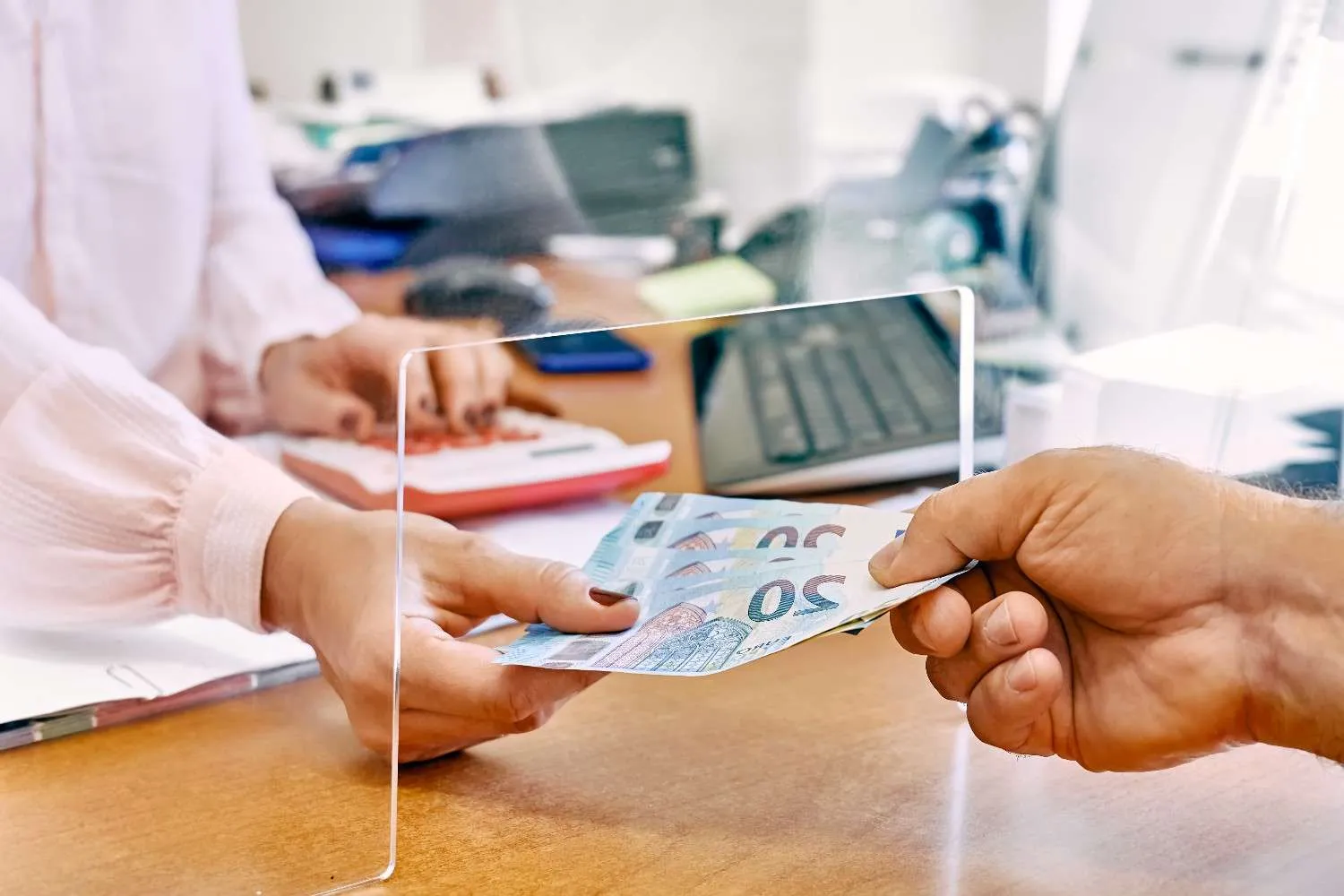
Navigating the world of money exchange in Hong Kong can feel like stepping into two different worlds at once. On one street, you'll see tourists haggling for a good rate on their holiday cash. On another, you'll find corporate giants moving millions between currencies in the blink of an eye. For an entrepreneur or a small business owner, the challenge is the same: how do you get the best deal, sidestep those sneaky hidden fees, and make sure your money gets where it needs to be, safely and on time?
Think of this as your playbook. Understanding the mechanics of Hong Kong's currency system is the first step toward making smarter financial decisions in one of the planet's most dynamic financial hubs.
Understanding Hong Kong's Currency System
For any entrepreneur steering a business, getting the lay of the financial land isn't just a good idea—it's essential for survival. This isn't just about swapping HKD for USD. It's about protecting your profit margins, maintaining healthy cash flow, and outmaneuvering your competition. Hong Kong’s currency system has a few unique features that make it both a fortress of stability and a magnet for global business.
To get a clear picture of the Hong Kong Dollar (HKD), imagine a sturdy speedboat securely tethered to a massive supertanker—the US Dollar (USD). This isn't a loose connection; it's a deliberate monetary policy known as a currency peg.
Why the HKD-USD Peg Matters
Hong Kong’s central bank, the Hong Kong Monetary Authority (HKMA), is the captain of this ship. They work tirelessly to ensure the HKD trades within a very tight, predictable range against the USD. This policy has been the bedrock of the city's financial stability for decades, giving businesses like yours a predictable environment for trade and investment. For you, this stability means less guesswork and fewer sleepless nights when you're invoicing clients in USD or paying suppliers overseas.
For years, the Hong Kong dollar has reliably hovered around 7.8 HKD to 1 USD. You'll see minor fluctuations, but that tight peg is the result of the HKMA's "currency board" system. They hold vast reserves of US dollars to back the local currency, which gives global markets immense confidence in the HKD's value. If you want to see this in action, you can dig into the historical exchange rate data from the Inland Revenue Department and see just how solid that connection has been.
Three Terms You Need to Know
Before we dive into the practicalities, let's lock down three key concepts. These terms will pop up again and again, and getting them right is crucial to mastering money exchange in Hong Kong.
- Exchange Rate: This is simply the price of one currency in terms of another. It's in constant motion, driven by the tides of global markets.
- The Spread: This is the gap between the "buy" and "sell" price a provider offers. Think of it as their built-in profit margin—and it's often the biggest hidden cost you'll face.
- Fees: These are the explicit charges you see on the bill, like a "transfer fee" or an "admin charge."
It’s a classic rookie mistake to focus only on the fees while ignoring the spread. A provider might advertise "zero fees," but if their exchange rate is poor, you’re still losing money. Always calculate the total cost before you commit.
Comparing Money Exchange Providers in Hong Kong
Choosing where to exchange your money in Hong Kong isn't a minor administrative task—it's a strategic decision that directly impacts your bottom line. To bring this to life, let's follow the journey of a local SME, "Artisan Exports," as they need to pay a supplier in the United States.
Artisan Exports has an invoice for $10,000 USD. Their choice of how to convert their HKD will reveal the real-world trade-offs between traditional banks, street-side money changers, and modern digital platforms.
This quick visual guide can help you map out the best path for your own business needs.
As the infographic shows, while the well-trodden paths like banks offer familiarity, newer alternatives can provide significant advantages depending on your specific goals.
The Traditional Bank Route
First, Artisan Exports considers their long-time corporate bank. It feels safe, reliable, and familiar. They can log into their online portal, check the bank’s exchange rate for the day, and see the standard HKD transfer fee.
But there's a catch. Although the process is straightforward, the exchange rate offered is noticeably worse than the mid-market rate they saw on Google. Banks bake a substantial margin (the "spread") into their rates, which is how they profit from the conversion. This hidden cost, on top of the fixed fee, means Artisan Exports would pay a premium for the convenience of sticking with what they know.
Exploring Licensed Money Changers
Next, the owner thinks about a well-known licensed money changer in Central. These shops are famous for offering excellent cash exchange rates, often much better than what you'd find at the airport or even some banks. For a business-to-business transfer, however, it's not quite so simple.
The rate might be sharper, but sending a large international payment often involves more paperwork and a physical visit. For a busy SME, the time spent travelling and waiting in line is a real operational cost. Money changers are fantastic for swapping physical cash, but they aren't always set up for seamless digital B2B transactions.
The Modern Fintech Alternative
Finally, Artisan Exports explores a fintech platform designed for international business payments. The sign-up process is entirely online. After completing a few digital Know Your Business (KYB) checks, they’re ready to go.
This is where the difference becomes crystal clear:
- Transparent Rates: The platform displays an exchange rate incredibly close to the mid-market rate, with a small, clearly stated fee. The total cost is visible upfront—no nasty surprises.
- Speed and Efficiency: The payment is set up in minutes from their office computer. The funds often arrive with the US supplier much faster than a conventional bank wire.
- Multi-Currency Functionality: These platforms often come with multi-currency accounts, which is a game-changer for a business like Artisan Exports. To learn more, our guide on opening a multi-currency bank account in Hong Kong explains how this can shield your business from currency volatility.
For an SME, this isn't just about saving money on one payment. It’s about building a smarter, more agile financial infrastructure. A bank offers security, but a fintech platform often delivers the speed, low cost, and transparency a growing business needs to thrive globally.
In the end, Artisan Exports chose the fintech platform. The savings from the superior exchange rate more than covered the transfer fee, and the time they reclaimed was invaluable. This story shows that looking beyond the default options for your money exchange in Hong Kong can unlock tangible, measurable benefits.
Hong Kong Money Exchange Provider Comparison
To help you weigh the options at a glance, here’s a breakdown of what each provider type typically offers.
| Provider Type | Best For | Typical Exchange Rate | Common Fees | Speed & Convenience |
|---|---|---|---|---|
| Traditional Banks | Large, infrequent transfers where security is the top priority; existing banking relationships. | Mid-market rate + 2-5% spread | Telegraphic transfer fees (HK$100-HK$250), receiving bank fees. | Slow (2-5 business days), but convenient via online banking portal. |
| Money Changers | Exchanging physical cash for travel or small personal transactions. | Mid-market rate + 0.5-2% spread | Often no explicit fees, but built into the rate. | Instant for cash, but requires physical presence. Less ideal for digital B2B. |
| Fintech/EMIs | Regular international B2B payments, e-commerce, and businesses needing multi-currency accounts. | Mid-market rate + 0.2-1% spread | Small, transparent percentage or fixed fee. | Fast (same day to 2 days), fully digital, and highly convenient. |
Ultimately, the right choice boils down to your priorities. For a one-off, highly secure transfer, your bank is a solid bet. For holiday cash, a money changer is perfect. But for any business engaged in international trade, a fintech solution is almost always the most efficient and cost-effective path forward.
Understanding Exchange Rates and Hidden Fees
Have you ever searched for a currency conversion on Google? The number you see is the mid-market rate. Think of it as the 'wholesale' price of a currency—the raw, live rate that banks use to trade massive sums with each other. It’s the purest rate available, with no profit margin added.
But here’s the crucial part: that’s never the rate you actually get when you perform a money exchange in Hong Kong. The rate you’re offered is the 'retail' price, and the gap between the two is precisely where providers make their money.
This difference is known as the spread. It’s the margin the provider adds to the mid-market rate, and it’s often the biggest "hidden fee" of them all. It won’t show up as a separate line item on your receipt; it’s simply embedded in the less favourable rate you receive. A wider spread means a worse deal for you.
Demystifying the Buy and Sell Spread
You can see the spread in action by looking at the daily rates posted by any bank. They always list two prices for a currency pair: a "buy" rate (the price they'll pay to buy it from you) and a "sell" rate (the price you'll pay to buy it from them). That gap is their guaranteed profit margin.
For example, recent indicative rates from The Hong Kong Association of Banks (HKAB) showed a selling rate of around 513.6 HKD for 100 Australian dollars, but their buying rate was only 497.55 HKD. That difference is the spread, ensuring the bank profits from every transaction, whether you're buying or selling.
The key takeaway is simple: even a "zero fee" transfer is never truly free. The real cost is almost always hidden inside an uncompetitive exchange rate. For a deeper dive, our guide on the Hong Kong bank foreign exchange rate breaks down exactly how these are calculated.
Uncovering Other Hidden Costs
Beyond the spread, several other charges can quietly erode your funds. These are often less obvious but can add up quickly, especially on larger international payments.
- Transfer Fees: This is the most straightforward charge, usually a flat fee for sending the money, often called a telegraphic transfer (TT) fee.
- Receiving Bank Fees: This one catches many people by surprise. The recipient's bank can, and often does, charge a fee just for processing the incoming international payment.
- Intermediary Bank Fees: If your payment needs to be routed through several banks to reach its destination, each "correspondent" bank might take a small cut for their service.
A provider might advertise a low sending fee, but if the money passes through two intermediary banks, you could lose an extra HK$200-HK$400 before it even arrives. You have to ask about the entire fee structure, not just the upfront cost.
A Real World Example of Total Cost
Let's see how this plays out. Imagine your business needs to send $10,000 USD to a supplier in Hong Kong.
Provider A (A Traditional Bank):
- Exchange Rate: 1 USD = 7.75 HKD (when the real mid-market rate is 7.80)
- Transfer Fee: HK$200
- Calculation: ($10,000 x 7.75) – HK$200 = 77,300 HKD arrives.
Provider B (A Modern Fintech Platform):
- Exchange Rate: 1 USD = 7.79 HKD
- Transfer Fee: 0.5% of the transaction (HK$390)
- Calculation: ($10,000 x 7.79) – HK$390 = 77,510 HKD arrives.
Even with a higher stated fee, Provider B delivered HK$210 more to your supplier's account. Why? Because the slightly better exchange rate made a much bigger difference than the transfer fee. This is why you must always calculate the final receiving amount to truly understand the cost of any money exchange in Hong Kong.
Navigating Compliance and Regulations
For any business operating in Hong Kong, getting compliance right isn't just about ticking boxes—it's the foundation of a secure and reputable financial operation. The rules surrounding money exchange in Hong Kong might seem complex at first, but they all serve a single purpose: keeping the financial system safe, transparent, and fair for everyone.
Think back to setting up your first corporate bank account. The moment you began, you were likely met with a cascade of acronyms: AML, CFT, KYC, KYB. It’s easy to view these as frustrating hurdles. But a better way to see them is as the financial institution's way of getting to know you, building a relationship based on trust from day one.
Why Your Business Needs a Financial Handshake
At the heart of Hong Kong's financial regulations are its Anti-Money Laundering (AML) and Counter-Financing of Terrorism (CFT) frameworks. These aren't just bureaucratic jargon; they're essential safeguards designed to prevent illicit funds from contaminating the legitimate economy. This is where Know Your Customer (KYC) and Know Your Business (KYB) checks come into play.
When a bank or payment provider requests your documents, they're performing a financial handshake. They need to verify your identity and understand your business operations to ensure every transaction is legitimate. This process doesn't just protect them; it protects your business from inadvertently becoming entangled in financial crime.
As part of this, it's wise to keep an eye on all forms of currency exchange, including emerging digital ones. Staying informed on topics like the evolving stablecoin regulatory framework in Hong Kong can help you stay ahead of future regulatory shifts.
Preparing Your Documents for a Smooth Onboarding
Imagine this: you're ready to open a multi-currency account to start paying international suppliers. The provider requests a standard list of documents. Any delay at this stage can jam up your cash flow, which is why having everything prepared beforehand is a significant strategic advantage.
Here’s a typical checklist of what you'll need:
- Business Registration Certificate: The non-negotiable proof that your company is legally registered in Hong Kong. Think of it as your business's birth certificate.
- Director and Shareholder Identification: Expect to provide government-issued IDs (passports are standard) and proof of address for all key individuals. This confirms who owns and controls the company.
- Proof of Business Operations: This is your opportunity to tell your company's story. Have contracts, invoices, or a clear business plan ready to demonstrate what you do and prove you're a legitimate commercial enterprise.
- Source of Funds Declaration: Institutions need to understand where your initial capital came from. This could be anything from personal savings to investor funding.
The secret to a fast approval is transparency. Don't just submit a pile of documents—tell a story. A brief, clear summary of your business model and why you need the account can make all the difference to a busy compliance officer.
Actionable Tips to Avoid Delays and Fund Freezes
Getting the account open is step one; keeping it running smoothly is the real prize. Account freezes are a massive headache for SMEs, often triggered by automated systems flagging something that looks out of the ordinary. A little proactive communication can save you from this nightmare.
To keep your funds flowing freely, adopt these best practices:
- Be Descriptive with Payments: Never leave the payment reference field blank. Instead of "Payment," write "Invoice #INV-2024-007 for marketing services." This gives compliance systems immediate context.
- Communicate Large Transactions: If a large or unusual payment is coming in or going out, give your provider a heads-up. A quick email can pre-clear a transaction that might otherwise be flagged.
- Ensure Consistency: Make sure the sender and receiver names on transfers are a perfect match for the account details. Even a small mismatch can trigger an automated hold.
- Maintain a Clear Paper Trail: Keep all your invoices, contracts, and relevant correspondence organised. If a provider ever requests more information, you can provide it instantly, resolving the issue in hours, not days.
By understanding the why behind the rules and preparing your documentation with care, you can navigate the compliance side of money exchange in Hong Kong with confidence. This isn't just about following regulations; it's about building a resilient financial foundation for your business to grow on the global stage.
Effective FX Strategies for Your Business
If your business regularly handles payments across different currencies, simply accepting the exchange rate on any given day is a high-stakes gamble. It's like trying to navigate a ship in a storm without a rudder—you're completely at the mercy of the market's unpredictable swings. Transitioning from simple spot exchanges to a thoughtful foreign exchange (FX) strategy is vital for protecting your profit margins and achieving budget certainty.
This isn't about becoming a Wall Street trader. It's about using simple, powerful tools to insulate your business from the turbulence of currency markets. Think of it as proactive financial planning rather than reactive damage control. When you have invoices to pay or revenue coming in from overseas, a sudden shift in the exchange rate can erase your profit on a deal before you even realise it.
Locking in Your Future with Forward Contracts
For most SMEs, one of the most practical and effective tools is a forward contract. The concept is simple, but its impact is profound.
Here’s an analogy: imagine you’re planning a large company event six months from now. You find a great venue that lets you lock in today’s prices for everything. No matter how much costs rise over the next six months, your price is guaranteed. A forward contract does the exact same thing for currency.
You and your FX provider agree to exchange a specific amount of money on a future date, but at an exchange rate that you fix today. This completely removes the guesswork, eliminating the risk that the rate will move against you before your payment is due.
A forward contract is your financial anchor in a volatile market. It transforms an unknown future cost into a predictable, budgeted expense, giving you the stability to plan and price your own goods and services with confidence.
A Real-World Hedging Example
Let's return to our Hong Kong-based exporter, "InnovateHK." They manufacture tech gadgets and have just secured a major order with a US retailer. They are due to receive a payment of $250,000 USD in 90 days.
The challenge? All their operational costs—salaries, rent, local suppliers—are in Hong Kong Dollars (HKD). Their entire profit margin is exposed to the fluctuations of the USD-to-HKD exchange rate over the next three months. If the US dollar weakens against the HKD during that time, their $250,000 will convert into fewer Hong Kong dollars, directly eroding their bottom line.
Instead of hoping for the best, InnovateHK’s finance director decides to hedge. They use a forward contract to lock in an exchange rate of 1 USD = 7.82 HKD.
- The Outcome: Ninety days later, the actual spot rate has dropped to 7.78 HKD.
- Without a Hedge: Their revenue would have been $250,000 x 7.78 = HK$1,945,000.
- With the Forward Contract: They receive their guaranteed rate, converting at $250,000 x 7.82 = HK$1,955,000.
With one strategic move, InnovateHK protected HK$10,000 of pure profit. That's the power of proactive FX management. For a more detailed look at managing these risks, our guide on controlling risk exposures in foreign exchange for companies in Hong Kong dives much deeper.
Other Practical Hedging Tools
Forward contracts are a fantastic starting point, but they're not the only option. As your business's needs become more complex, you might explore tools that offer greater flexibility.
- Currency Options: This gives you the right, but not the obligation, to exchange currency at a predetermined rate on a future date. It's like an insurance policy: you pay a small premium for protection against adverse rate movements, but you can still benefit if the market moves in your favour.
- Limit Orders: This is an automated instruction for your FX provider. You tell them to execute a trade only if the exchange rate reaches a specific, more favourable target. It allows you to capitalize on positive market shifts without being glued to a screen all day.
To build more robust financial plans, it’s worth getting familiar with scenario planning techniques. This helps you map out how different rate movements could impact your cash flow and choose the right hedging tool for each possibility.
Ultimately, managing money exchange in Hong Kong isn't about trying to outsmart the market. It's about taking control of your currency risk so you can focus on what you do best: running and growing your business.
Your Hong Kong Money Exchange Questions, Answered
When you're running a business that operates across borders, questions are inevitable. It's a complex landscape. We've gathered some of the most common queries we hear from entrepreneurs and provided clear, practical answers to help you navigate your finances with confidence.
What Is the Cheapest Way to Exchange Money in Hong Kong?
This is the big question, but the answer isn't one-size-fits-all. What's "cheapest" depends entirely on whether you're swapping a bit of holiday cash or wiring a large payment to a supplier.
For small amounts of physical cash, licensed money changers in high-traffic areas like Central or Tsim Sha Tsui almost always offer the best deal. They have lower overheads than big banks or airport kiosks and rely on high volume, so their rates are far more competitive.
However, for larger business transfers, the game changes completely. Here, fintech platforms and specialist FX providers are the clear winners. They provide exchange rates much closer to the true mid-market rate and have lower, more transparent fees than traditional banks.
A critical rule of thumb: always calculate the total cost. Don't be lured by flashy "zero fee" marketing. The only number that matters is the final amount that arrives in the recipient's account, as this accounts for both the exchange rate spread and any hidden charges.
How Easily Can My Business Open a Multi-Currency Account?
Opening a multi-currency account is a standard—and essential—step for any Hong Kong business with international clients or suppliers. While both major banks and newer financial institutions offer them, the onboarding experience can be vastly different.
Regardless of the provider, your business will undergo a Know Your Business (KYB) check. This means providing core documents like your Business Registration Certificate, details on your company structure, and identification for all directors and key shareholders.
- Traditional Banks: The process can feel cumbersome, often involving significant paperwork, potential in-person meetings, and a timeline that can stretch over several weeks.
- Fintech Platforms: These providers have designed their processes for the digital era. The application is typically online, streamlined, and can often be completed in just a few days.
These accounts are invaluable. They allow you to hold foreign currency without being forced to convert it back to HKD immediately, saving you from paying conversion fees on every single incoming or outgoing transaction.
How Can My Business Avoid Having Funds Frozen During a Transfer?
Few things are more stressful for an entrepreneur than a frozen payment. It can halt your operations and strain supplier relationships. A freeze is usually triggered by an automated compliance system that flags a transaction for looking unusual or lacking clear information.
The good news is you can dramatically reduce this risk by making your transactions as clear and predictable as possible. It's all about providing context.
- Always Add a Clear Purpose of Payment: Instead of just "payment," be specific. Use descriptions like "Payment for Invoice #AB-54321" or "Consulting Services Q2 2025."
- Give a Heads-Up for Large Transfers: If you're sending or expecting a sum that's unusually large for your business, inform your bank or payment provider beforehand. A quick email can pre-clear a transaction that might otherwise raise a red flag.
- Make Sure Names Match Perfectly: Double- and triple-check that the sender and receiver names on the transfer are an exact match for the official account details. Even minor typos can trigger an automated hold.
- Keep a Solid Paper Trail: Have all your invoices, contracts, and related emails organised. If a provider asks for documents to verify a payment, you'll be able to send them over immediately and resolve the issue quickly.
How Does the HKD Peg to the USD Affect My Business?
The direct link between the Hong Kong Dollar and the US Dollar—the HKD-USD peg—is a cornerstone of Hong Kong's financial stability. The Hong Kong Monetary Authority works to keep the exchange rate within a narrow band of roughly 7.8 HKD to 1 USD.
For your business, this link offers incredible predictability, especially if you trade heavily with the US or invoice clients in USD. It effectively removes a significant amount of foreign exchange risk from your USD-denominated transactions.
This stability means you can budget and forecast revenue with much greater confidence. You don't have to worry that a sudden currency swing will decimate your profit margins or inflate your costs. It’s a primary reason why Hong Kong remains such a trusted and reliable hub for international business.
Conclusion
Handling the complexities of international banking, tax, and compliance on your own is a tall order. At Lion Business Consultancy Limited, we serve as your private financial manager, building secure and compliant frameworks that protect your business today and set it up for global growth.