

 Hong Kong

 Singapore
 UAE
UAE

 Malaysia

 Turkey
 UK
UK
 EU
EU
 US
US
 Switzerland
 Bahamas Bank Account
 Cayman Islands Bank Account
 Mauritius Bank Account
 BVI
BVI
 Seychelles

Starting a business in Hong Kong is an incredible thrill, but let's be honest—managing the finances can feel like trying to navigate the MTR at rush hour without a map. Professional accounting services in HK are that map. They don't just keep you out of trouble; they turn confusing numbers into a clear path for growth, helping you make smart, data-driven decisions.
Your Strategic Guide to Hong Kong Accounting

You’ve launched your business in one of the world's most dynamic financial hubs. It’s an exciting, fast-paced journey. But behind every successful company is a foundation of solid financial management. Many founders quickly discover their passion for building a great product doesn't quite extend to a love for spreadsheets, tax codes, and regulatory filings.
This is where expert accounting services really prove their value. We've all heard the stories: a brilliant startup gets bogged down by chaotic bookkeeping. When it comes time to secure a loan or pitch to investors, they can't produce the clear financial statements needed. They end up flying blind, making crucial decisions on gut instinct instead of solid data.
Beyond Bookkeeping: A Partnership for Growth
Now, picture that same startup partnering with a dedicated accounting firm. Suddenly, that chaos gives way to clarity. The messy spreadsheets are replaced with a real-time financial dashboard showing cash flow trends, profit margins, and other vital metrics. This isn't just about ticking compliance boxes; it's about unlocking a genuine strategic advantage.
For entrepreneurs in Hong Kong, robust accounting isn’t an expense—it’s an investment in clarity and credibility. It’s the language that banks, investors, and regulators understand, and fluency is essential for any business serious about growth.
This guide is for you—the SME owner and entrepreneur who wants to do more than just 'get the books done'. We’ll explore how strategic financial management can become a cornerstone of your success in Hong Kong’s competitive market. The goal is to demystify the numbers and show you how to turn expert financial guidance into your secret weapon.
Making the shift from reactive to proactive financial management opens up a world of possibilities:
- Confident Decision-Making: Stop guessing. Make informed choices about hiring, expansion, and investment based on accurate financial insights.
- Improved Access to Capital: Clean, professionally prepared financial records are non-negotiable when you're seeking funding from banks or venture capitalists.
- Enhanced Operational Efficiency: A clear view of your finances helps pinpoint where you can trim costs and boost your bottom line.
- Peace of Mind: Knowing your tax and compliance obligations are handled correctly lets you focus on what you do best—running your business.
Over the course of this guide, we'll walk you through the essential services, compliance rules, and modern tools that shape accounting in Hong Kong today. By the end, you'll see your accountant not as a number-cruncher, but as a vital strategic partner.
What Accounting Services Actually Cover in Hong Kong
When you first start a business, "accounting" can feel like a big, intimidating concept that just means "taxes." But that's only one piece of the puzzle. Think of it less as a single task and more like a set of specialized tools, each designed to keep your company financially healthy and pointing in the right direction.
Getting your head around what these different services do is the first step. They all work together, building a solid financial structure that doesn't just keep you compliant, but actually gives you a clear view of how your business is really performing.
Bookkeeping and Financial Statements
Everything starts with bookkeeping. This is the absolute bedrock of your finances. It's the daily, disciplined work of recording every single transaction—every invoice you send, every bill you pay, every sale you make. It’s like keeping a detailed logbook for your business journey; without it, you're just guessing where you've been and where you're headed.
Once all that raw data is organized, it gets turned into financial statements. These are the key reports that tell your company's story in numbers. The big three are the balance sheet (what you own and owe), the income statement (your profit or loss), and the cash flow statement (where your cash is actually coming from and going). They translate the day-to-day chaos into a clear, high-level summary.
And these aren't just for you. Banks, investors, and the government will look at these documents first to judge the health and viability of your business.
Audit and Assurance
Next up is the audit. For most limited companies in Hong Kong, this isn't optional—it's an annual legal requirement. Think of it as an independent health check for your finances. A qualified Certified Public Accountant (CPA) comes in to examine your books and verify that your financial statements are accurate and follow the official Hong Kong Financial Reporting Standards (HKFRS).
But this is much more than a box-ticking exercise. A clean audit report is a powerful seal of approval. It tells everyone—from potential investors to banking partners—that your numbers are reliable and your business is run properly. This commitment to transparency is a huge part of what makes Hong Kong such a trusted place to do business.
A clean audit isn't just a compliance certificate; it's a testament to your company's financial integrity. It demonstrates transparency and robust governance, opening doors to opportunities that are closed to businesses with questionable records.
Tax Advisory and Planning
Finally, there’s tax advisory and planning. If bookkeeping looks at the past and auditing verifies the present, tax advisory helps you prepare for the future. It’s about strategically managing your obligations under Hong Kong’s tax laws, mainly the Inland Revenue Ordinance (IRO), in the smartest way possible.
A great tax advisor does more than just file your Profits Tax Return. They'll proactively help you structure deals, find all the deductions you're entitled to, and plan ahead to manage future tax impacts. The goal is simple: stay 100% compliant while legally minimizing the tax you pay, freeing up more capital to pour back into growing your business.
To give you a clearer picture, here’s a breakdown of how these services fit together to support a growing business in Hong Kong.
Core Accounting Services for Hong Kong SMEs
| Service Category | What It Involves | Key Benefit for Your Business |
|---|---|---|
| Bookkeeping | Recording all daily financial transactions (sales, expenses, payments). | Provides the raw data needed for all other financial activities and decision-making. |
| Financial Statements | Preparing the Balance Sheet, Income Statement, and Cash Flow Statement. | Translates complex data into an easy-to-understand snapshot of your financial health. |
| Audit & Assurance | Independent verification of your financial records by a licensed CPA. | Builds trust with investors and lenders; ensures you meet legal compliance requirements. |
| Tax Advisory | Strategic planning, filing tax returns, and ensuring compliance with the IRO. | Legally minimises your tax burden and prevents costly penalties from the IRD. |
Ultimately, each of these services plays a crucial role. The strength of Hong Kong's business environment is tied directly to the quality of its professional services. In 2022, the export of accounting services from Hong Kong was valued at HK$2.35 billion, a testament to the sector's resilience and its deep ties with Mainland China. This stability is built on high standards, like the mandatory CPA audits, which ensure every company here operates with financial integrity. You can get a better sense of this by reviewing expert insights on Hong Kong's economic expansion.
Navigating Hong Kong Financial Compliance
Operating a business in Hong Kong means playing by a well-established set of rules. Financial compliance isn't just bureaucratic box-ticking; think of it as the foundation of your business. Without a solid, compliant foundation, everything you build on top is at risk. It’s about creating trust and ensuring the long-term health of your company.
For any entrepreneur here, getting a handle on the local regulations is non-negotiable. Two main pieces of legislation shape your financial duties: the Companies Ordinance, which is the rulebook for running your company, and the Inland Revenue Ordinance (IRO), which covers everything tax-related.
This means that from the moment you open for business, you’re expected to keep impeccable financial records. These aren't just for your own benefit. They are the official story of your company's financial journey, forming the basis for your annual filings and tax returns.
The Companies Ordinance Unpacked
The Companies Ordinance is the primary manual for corporate governance in Hong Kong. It lays out a number of obligations, but when it comes to your finances, two things are absolutely fundamental.
First, you must maintain proper books of account. This might sound straightforward, but the law requires your records to present a "true and fair view" of your company's financial health and clearly explain every transaction. We're talking about more than just a simple ledger of money in and money out; it’s about creating an unambiguous, auditable financial trail.
Second, every year you have to prepare formal financial statements. These reports, which include your balance sheet and profit and loss statement, must comply with the Hong Kong Financial Reporting Standards (HKFRS). These are then filed with the Companies Registry as part of your annual return, which is essential for keeping your company in good standing.
The Mandatory Annual Audit Requirement
This is a big one that often catches new business owners by surprise. In Hong Kong, pretty much every incorporated company is legally required to have its annual financial statements audited by an independent Certified Public Accountant (CPA). The only real way around this is if your company is officially declared as dormant.
An annual audit is more than just a legal hurdle; it's a badge of credibility. It sends a powerful message to banks, investors, and potential partners that your financial statements have been professionally verified, giving them the confidence to work with you.
This isn't a rubber-stamp exercise. A CPA will meticulously go through your books, verify your transactions, and confirm that your financial statements are both accurate and fully compliant with the required standards. This process is a key reason why Hong Kong is seen as such a reliable international financial hub.
For small and medium-sized businesses, this is where professional accounting services in HK become invaluable. A good accountant does more than just prepare your books for the audit; they keep them compliant all year round. This makes the audit itself a much smoother, less stressful experience. They'll talk to the auditor, handle any questions, and make sure all the paperwork is ready to go.
A properly managed audit does more than just keep you compliant. The auditor’s review can often shine a light on internal inefficiencies or weaknesses in your financial controls that you might have missed. In the end, this requirement, along with strict tax deadlines, pushes businesses to be disciplined and transparent. To see how this all feeds into your tax duties, check out our guide to Hong Kong Profits Tax. Staying organised isn't just good practice—it's the law.
Choosing the Right Accounting Partner in Hong Kong
Picking a firm to handle your company's finances is one of the most critical decisions you'll make as a founder. This isn't just about hiring a service provider; it's about bringing on a business partner who will be in the trenches with you. Looking at price alone is a common mistake—you need to find a team whose expertise, communication style, and vision truly align with where you want to take your business.
The right accounting partner can be a huge asset, helping you spot opportunities and steer clear of trouble. The wrong one can lead to missed chances and expensive, time-consuming mistakes. The goal is to find a firm that goes beyond just ticking compliance boxes. You need a strategic ally who genuinely understands your industry and is invested in seeing you succeed.
Evaluating Potential Accounting Firms
When you start looking for accounting services in HK, it's easy to feel overwhelmed. Every website seems to promise the same thing. To really find the right fit, you have to ask smarter questions. Forget just asking, "How much do you charge?" and start digging into what actually matters for a successful, long-term partnership.
Here are a few questions that will tell you what you really need to know:
- Industry Experience: "What's your experience with businesses in the [your industry] sector?" A firm that gets the nuances of your field—whether it's F&B, tech, or e-commerce—can offer advice that’s genuinely useful, not just generic.
- Technology Stack: "What accounting software and tools do you work with?" Any modern firm worth its salt should be fluent in cloud-based platforms like Xero or QuickBooks. This gives you a real-time view of your finances, anytime, anywhere.
- Communication and Reporting: "How often will we connect, and what do your reports look like?" You need a partner who is proactive with insights, not someone you have to chase for updates. Clear, consistent communication is non-negotiable.
The Power of a Strategic Switch: A Case Study
Let's look at a real-life example. An e-commerce SME here in Hong Kong was using a very cheap, one-person bookkeeping service. Sure, their books were technically compliant, but they were getting zero strategic advice. Cash flow was a constant headache, and they were essentially guessing when it came to ordering inventory.
Fed up, they switched to a modern, outsourced accounting firm that actually specialized in e-commerce. The new team didn't just tidy up the books. They moved them onto a cloud accounting system, set up proper inventory tracking, and built a detailed cash flow forecast.
The result? Within six months, the SME saw a 30% improvement in their cash flow management. They could finally anticipate their busy seasons and plan their stock purchases properly, turning a major problem into a real competitive advantage. That's the difference between a simple bookkeeper and a true accounting partner.
This infographic breaks down one of the most fundamental compliance questions for any business operating in Hong Kong.
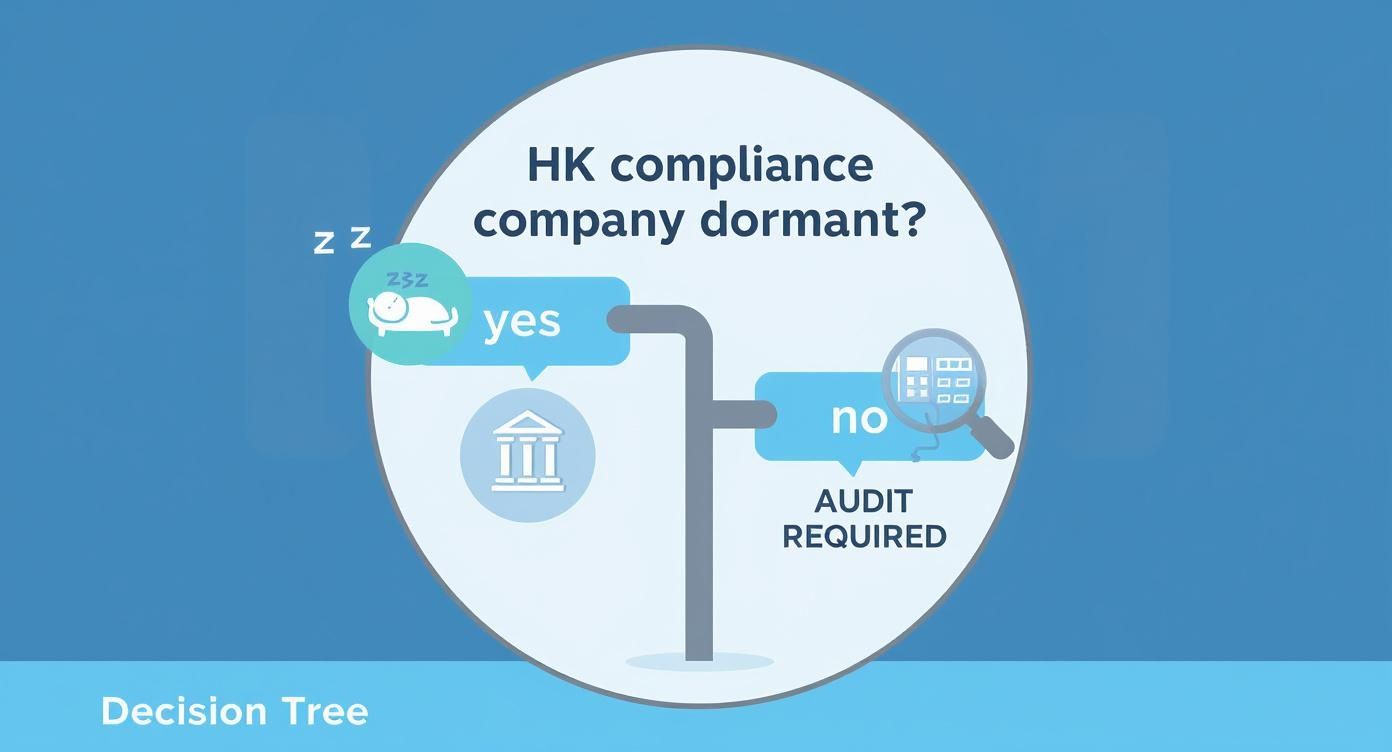
As you can see, the path is pretty clear. Unless your company is officially registered as dormant with the authorities, an annual audit is a mandatory part of doing business here.
Comparing Accounting Solutions for Your HK Business
One of the biggest crossroads for SMEs is deciding between hiring an in-house accountant and outsourcing the function. It's a classic dilemma, and the right answer really depends on your specific needs, budget, and growth plans. The table below breaks down the key differences to help you think through the decision.
| Factor | In-House Accountant | Traditional Local Firm | Modern Outsourced Service |
|---|---|---|---|
| Cost | High fixed cost (salary, benefits, training). | Moderate, often billed hourly. Can have unpredictable costs. | Lower, predictable monthly fee. Highly cost-effective. |
| Expertise | Limited to the knowledge of one or two individuals. | Broad compliance knowledge, but may lack deep industry specialisation. | Access to a full team of specialists (tax, CFO, bookkeeping). |
| Scalability | Difficult to scale. Hiring and firing is slow and costly. | Can be slow to adapt to your company's growth or changing needs. | Very flexible. Easily scale services up or down as you grow. |
| Strategic Value | Can provide strategic input, but often buried in daily tasks. | Primarily focused on compliance and historical reporting. | Proactive strategic advice, real-time data, and forward-looking insights. |
While having someone in your office every day seems convenient, the costs go way beyond just a salary. Salaries in Hong Kong's finance world are competitive. A Corporate Finance Manager in a large company can pull in a median salary around HK$946,000, while even entry-level analyst roles in SMEs start near HK$399,000, according to the latest salary guide from Robert Half.
Outsourcing often gives you access to a much deeper pool of expertise for a fraction of what a single full-time hire would cost. You get an entire team—bookkeepers, tax experts, and senior advisors—all for one predictable monthly fee. This model is built for growth, letting you adjust your level of support as your business evolves. If you're weighing your options, it's worth exploring the advantages of outsourcing accounting to see how it might fit your company's structure.
Using Accounting Technology To Your Advantage
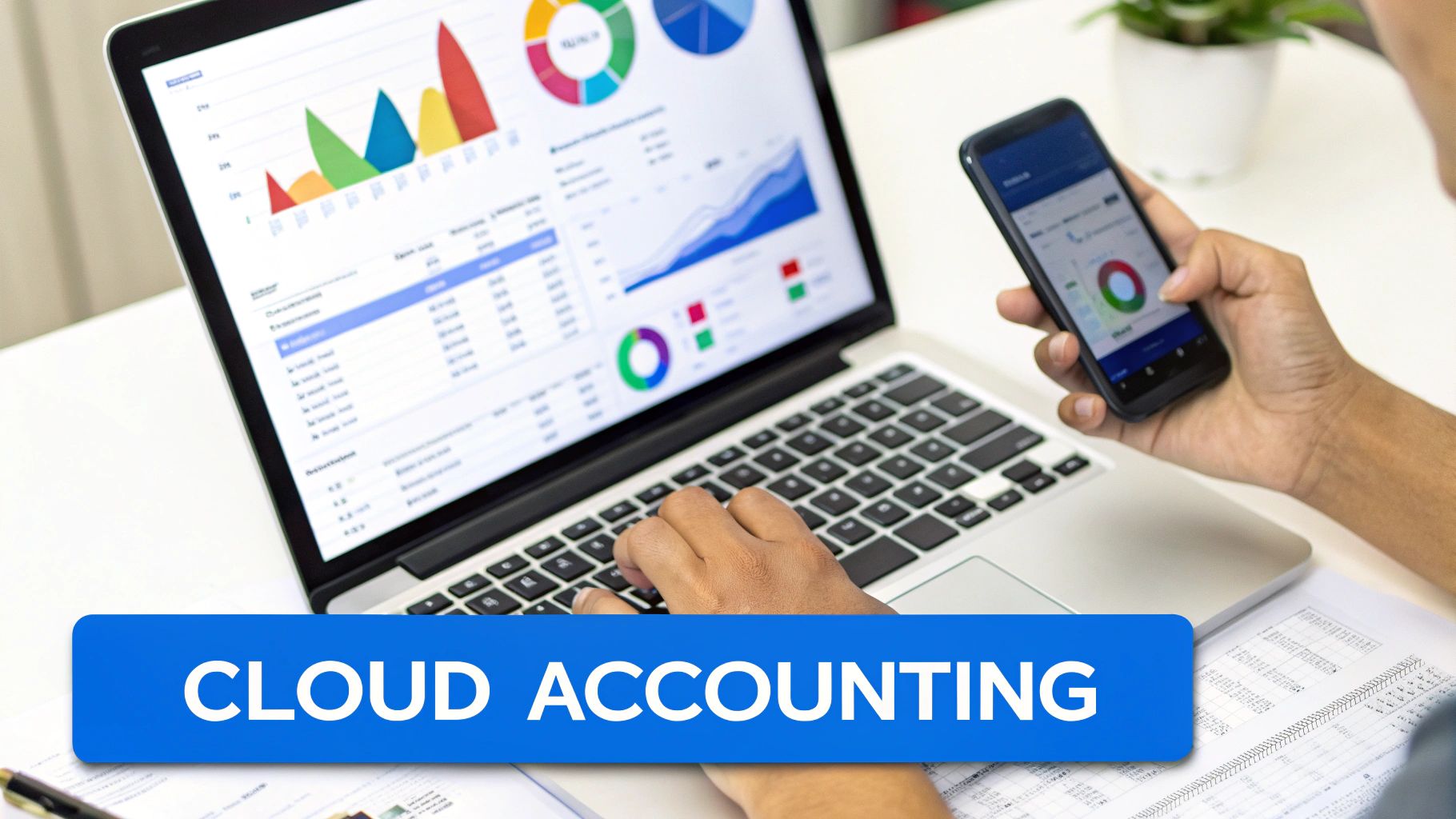
Let’s be honest, modern accounting has moved far beyond dusty ledgers and stacks of paper. Technology has completely transformed how savvy businesses manage their finances, and Hong Kong SMEs are in a prime position to reap the rewards. This isn't just about speed; it's about gaining a real competitive edge.
Think of it this way: old-school accounting was like using a paper road map. Sure, it could show you where you've been, but it offered very little insight into the road ahead. Today’s accounting tools are more like a live GPS for your business finances, giving you a real-time view of your position and helping you see what's coming around the next corner.
The Power of Cloud Accounting Platforms
For any forward-thinking business, cloud accounting platforms like Xero or QuickBooks are no longer optional—they’re essential. These systems give you a live, 24/7 snapshot of your company's financial health, accessible from anywhere in the world.
This constant access is a game-changer. You can fire off an invoice from your phone while you’re out for lunch, instantly see which clients have paid, and check your bank balances in seconds. That kind of visibility means you’re making decisions based on today's numbers, not a report from last month. When your accounting team is on the same platform, collaboration becomes seamless, and the data is always up-to-date.
Embracing technology isn't about chasing the latest trend. It’s about buying back your most valuable asset: time. By automating the routine tasks, you free up your team and your accounting partner to focus on what actually drives growth—strategy, foresight, and seizing opportunities.
This shift towards digital tools is a massive driver in the accounting world. Projections show the industry is set to grow at a compound annual rate of 5.1% through 2029, largely because of the efficiency gains from cloud software, AI, and data analytics.
Automation and AI: The New Standard
Beyond the cloud, automation and artificial intelligence (AI) are taking efficiency to a whole new level. These tools are built to handle the repetitive, time-sucking tasks that used to tie up accounting teams for hours.
Imagine a system that can automatically:
- Categorise expenses just by reading a photo of a receipt.
- Send out payment reminders to clients without you lifting a finger.
- Reconcile your bank transactions every single day.
This level of automation drastically cuts down the risk of human error and, more importantly, frees up your accounting partner to provide high-value strategic advice. Instead of spending their day on data entry, they can analyze your performance, build cash flow forecasts, and help you model different scenarios for growth. To really get the most from this, you could look into the top time and billing software for accountants to make your operations even smoother.
Getting these systems to talk to your other business tools is also key. For instance, linking your accounting software directly to your bank account makes reconciliation a breeze and gives you a much clearer financial picture. Our guide on digital solutions for your Hong Kong business bank account walks you through some excellent options for creating a more connected and efficient financial setup.
Using Financial Insights to Steer Your Growth
Once you've got your compliance nailed down and your books are in pristine condition, the real fun begins. This is where accounting stops being a chore and starts becoming your secret weapon for growth. It’s the point where expert accounting services in HK shift from just recording the past to actively building your company's future.
This next level of support is what we often call strategic advisory, or sometimes outsourced CFO services. Think of your accountant transforming from a historian, who just chronicles what's already happened, into a co-pilot, helping you see what's coming up on the road ahead. They start using your financial data to map out the future, spot opportunities, and dodge potential roadblocks.
Turning Numbers into Strategy
This forward-thinking approach is all about answering the big, meaty questions that keep every founder up at night. Instead of just knowing what you made last quarter, you can start confidently projecting what you'll make next quarter.
A strategic advisor helps you get a firm grip on the financial levers that actually drive your business forward:
- Cash Flow Forecasting: They'll build financial models that show you where your cash position will be in the coming weeks and months. This is crucial for avoiding unexpected shortfalls or planning the right time for a big investment.
- Budgeting and Variance Analysis: It's not just about setting a budget, but about constantly comparing your actual performance against it. This analysis shows you exactly where you're on track, where you're overspending, and where you're knocking it out of the park.
- Identifying the Right KPIs: They'll work with you to figure out the Key Performance Indicators (KPIs) that truly matter for your business—things like customer acquisition cost or lifetime value—and help you set up dashboards to watch them like a hawk.
Great accounting gives you the foresight to build a business that's not just profitable, but also resilient and ready to scale. It turns your financial data from a static report into a dynamic roadmap for making smarter, faster decisions.
A Real-World Example from Hong Kong's F&B Scene
Picture a popular local café looking to expand from one location to three. Their day-to-day bookkeeping was perfectly fine, but when they sat down with potential investors, they got hit with tough questions. What were their unit economics? What was the projected profitability for the new stores? What was their cash burn rate? Their simple P&L report just couldn't provide the answers.
So, they brought in a firm that offered strategic advisory. This new accounting partner didn't just tidy up their books; they built a comprehensive financial model from the ground up. This model projected revenues, costs, and cash flow for the two new locations, running several different scenarios—a best-case, a worst-case, and a most-likely.
Armed with this detailed forecast, the founders walked back into the investor meeting with a new level of confidence. They could clearly demonstrate the potential return, prove they had a solid grasp on the financial realities of their expansion, and show that their plan was built on hard data, not just a gut feeling. They secured the funding, and the expansion was a huge success. That’s the real-world power of moving beyond compliance and putting your numbers to work.
Your Questions on Hong Kong Accounting Answered
When you're running a business in a major financial hub like Hong Kong, questions about money and compliance are bound to come up. For entrepreneurs and SME owners focused on growth, getting straight answers is key. Here are some of the most common questions we get about accounting services in HK, answered without the jargon.
Is an Audit Mandatory for Every Hong Kong Company?
For almost every limited company in Hong Kong, the answer is a simple yes. An annual audit is a legal must-do. Your financial statements need to be thoroughly checked and signed off by a Hong Kong Certified Public Accountant (CPA). The only real exception is for companies that have officially filed as ‘dormant’ with the authorities.
But this isn't just about ticking a compliance box. An audited set of accounts adds a huge amount of credibility to your business. It tells banks, potential investors, and the Inland Revenue Department (IRD) that your numbers are solid and transparent. Think of it as a stamp of approval that reinforces your company’s standing in Hong Kong's trusted business environment.
What Is the Real Difference Between Bookkeeping and Accounting?
That’s a great question, and an analogy makes the distinction crystal clear.
Imagine you're building a house. Bookkeeping is the process of gathering and organizing all the building materials—every brick, plank, and nail. It’s the diligent recording of every single transaction, invoice, and receipt. Accounting, on the other hand, is the architect's job. They take all those raw materials to design and build the final structure, giving you financial statements and reports that offer a complete, insightful view of your business's health.
In short, bookkeeping is the 'what'—the day-to-day raw data. Accounting is the 'so what'—the analysis and strategic insight that you can pull from that data.
How Much Should I Budget for Accounting Services in Hong Kong?
There’s no one-size-fits-all answer here; accounting costs can vary quite a bit. A small startup with just a handful of transactions might only need a few thousand HKD a month for basic bookkeeping. On the flip side, a growing SME needing a full audit, tax advice, and strategic financial planning should expect to invest a lot more.
A few key things will shape the final price:
- Transaction Volume: Simply put, more sales, purchases, and payments mean more work.
- Business Complexity: If you’re dealing with international clients, multiple currencies, or tricky inventory, you'll need more specialized expertise.
- Level of Support: Do you just need someone to keep you compliant, or are you looking for a partner who can offer CFO-level insights and help you strategise?
The best approach is to get a few quotes. But remember, focus on the value and expertise they provide, not just the rock-bottom price.
Can I Use International Software Like Xero or QuickBooks?
Of course. Cloud-based tools like Xero and QuickBooks are fantastic for managing your daily bookkeeping and getting real-time visibility into your finances. They can make your internal processes much more efficient.
But it’s important to understand that this software doesn't take the place of a qualified local accountant. You still absolutely need a Hong Kong-based professional to ensure your accounts are fully compliant with Hong Kong Financial Reporting Standards (HKFRS). They're the ones who will prepare and submit all your statutory filings to the IRD correctly, keeping your business in good standing.
Conclusion
At Lion Business Consultancy Limited, we understand that these questions are just the tip of the iceberg. As your dedicated financial partner, we provide the clear answers and strategic guidance you need to navigate Hong Kong’s financial landscape with total confidence.
If you’re ready for a partner who can handle your compliance and help you plan your next move.