
 Hong Kong
 Singapore
 UAE
UAE
 Malaysia
 Turkey
 UK
UK
 EU
EU
 US
US
 Switzerland
 Bahamas Bank Account
 Cayman Islands Bank Account
 Mauritius Bank Account
 BVI
BVI
 Seychelles

Over the years, helping Turkish, European, and LATAM clients set up their companies in Hong Kong, I’ve noticed one recurring challenge: choosing the right banking partner. Traditional banks, financial institutions, and fintechs all promise different things – but the reality can surprise you. This guide is a strategic roadmap, built from real-world experiences, to help you navigate the process of bank account opening in hong kong with confidence.
Why Banking in Hong Kong Matters
Hong Kong stands as a premier global financial hub for solid reasons. It serves as an unparalleled gateway to Mainland China, and its tax-friendly environment attracts international businesses. A Hong Kong bank account connects you directly to this vibrant ecosystem, facilitating trade, investment, and cross-border payments. The prestige, however, comes with complexity, and the slick marketing can often hide the frustrating realities of the application process.
My First-Hand Observations: Different Clients, Different Needs
There is no single ‘best’ bank in Hong Kong; there’s only the right fit for your business. I’ve worked with diverse clients, and their industry dictates their non-negotiable banking requirements. My shipping clients needed global USD flows with low FX spreads, while tech entrepreneurs cared about remote onboarding and API-friendly fintech tools. A Turkish textile client with suppliers in Mainland China required a bank with strong cross-border RMB settlement capabilities, making a modern fintech with great EUR accounts completely useless for their core business.
Understanding these distinct needs is the first step in choosing the right path for your bank account opening in Hong Kong.
Comparing the Three Options: A Founder’s Perspective
Navigating the banking landscape means understanding your three main options: traditional banks, financial institutions, and fintechs. Each has its own rules, and your choice will directly impact your company’s agility and credibility.
Traditional Banks: The Credibility Powerhouses
When you think of banking in Hong Kong, giants like HSBC and Standard Chartered come to mind.
- Pros: They offer unmatched credibility, multi-currency accounts, and essential tools like letters of credit and trade finance, which are vital for manufacturing or shipping businesses. Their reputation is a significant asset when dealing with established global partners.
- Cons: The drawbacks are significant. Expect high minimum deposits, often in the USD 50k–100k range. The onboarding process is notoriously long, bureaucratic, and almost always requires an in-person meeting in Hong Kong. Compliance is incredibly strict.
- My Experience: I’ve seen several clients rejected due to “insufficient local presence” or because they couldn’t produce a Hong Kong office lease agreement. For a digital-first business, this is often a non-starter.
Financial Institutions / Payment Service Providers (EMIs): The Pragmatic Middle Ground
These licensed entities, often called Electronic Money Institutions (EMIs), offer a practical alternative for businesses that don’t fit the traditional banking mold.
- Pros: They offer much lower deposit requirements and significantly faster onboarding that can usually be completed remotely. You get international IBANs and robust multi-currency support, making them ideal for SMEs and international consultants.
- Cons: These institutions are typically not covered by Hong Kong’s Deposit Protection Scheme. Transaction fees can sometimes be higher, and they may have restrictions on serving certain industries.
- My Experience: I have successfully onboarded many clients into EMIs after traditional banks declined them. This worked far better for SMEs that needed to get operational quickly without being trapped in months of bureaucratic limbo.
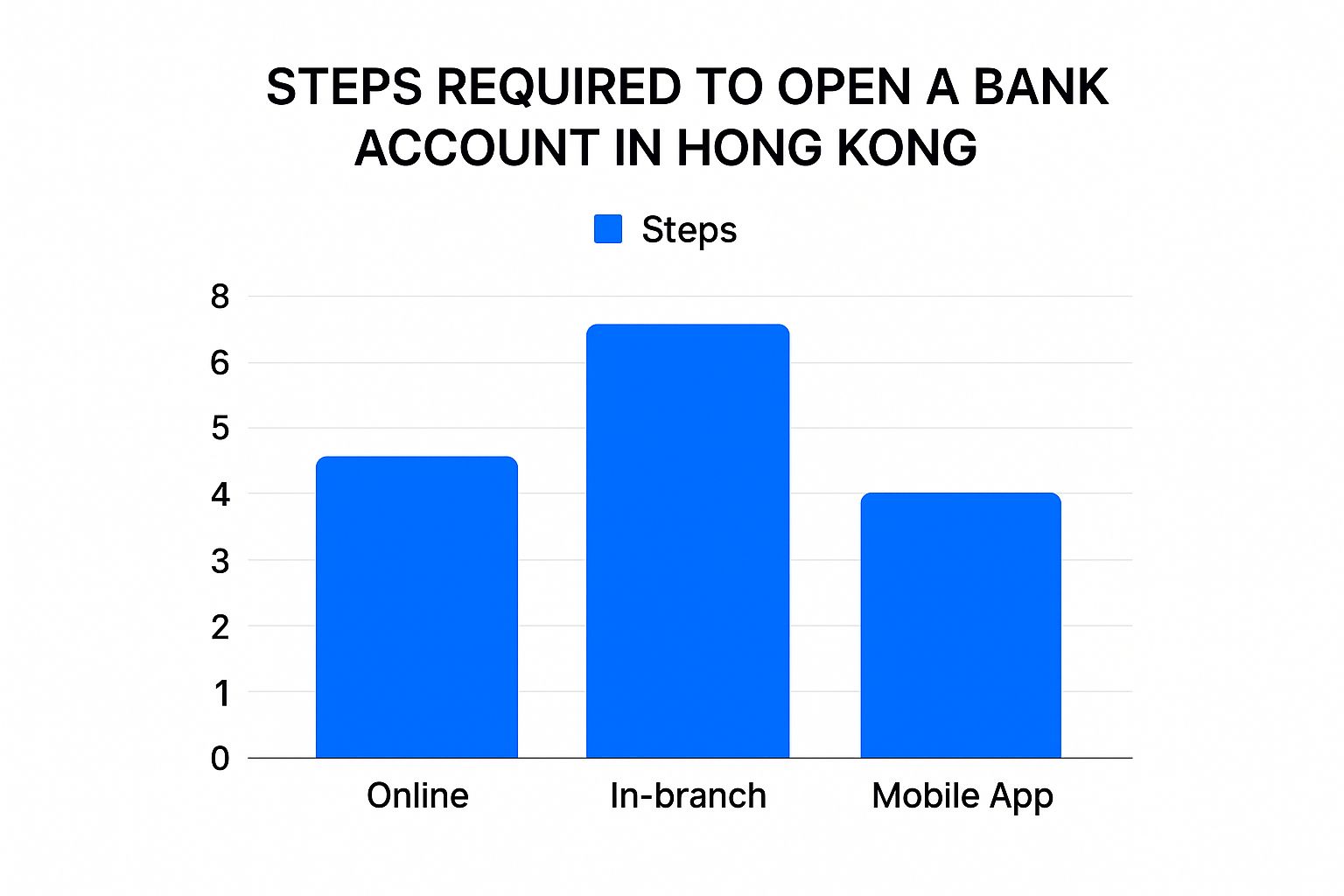
Fintechs / Digital Banks: The Agile Disruptors
Fintechs and digital banks are built for modern, global businesses, focusing on speed, technology, and user experience.
- Pros: Onboarding is incredibly quick, often completed online in a matter of days instead of months. They provide powerful API integrations for automating workflows with software like Xero and Stripe, along with highly competitive FX rates.
- Cons: Their product range is often limited, so you won’t find services like trade finance. There are also regulatory risks to consider; if a fintech loses its license, it can cause significant disruption to your operations.
- My Experience: I’ve recommended several specific fintechs to tech startups and e-commerce clients who needed to get up and running immediately. They were the perfect fit for businesses prioritizing speed and automation over traditional banking services.
Key Decision Factors (From My Perspective)
Making the right choice for your bank account opening in Hong Kong comes down to four critical factors. Thinking like a banker before you apply can save you months of frustration.

Compliance Readiness
This is the biggest hurdle. If you don’t have proper invoices and contracts, fintechs may be more flexible, but banks will not move forward. Traditional banks need a proven history of verifiable transactions. I’ve seen applications stall for weeks over a single missing document.
Deposit Requirements vs. Business Size
The financial barrier is real. Traditional banks often demand high minimum deposits that can stifle a startup’s growth. Financial institutions and fintechs typically have low or no deposit requirements, freeing up your capital to grow the business.
Type of Business
Your business model dictates your banking needs.
- Trading vs. SaaS vs. Shipping: A shipping business needs trade finance tools that only a traditional bank can offer. A SaaS company, on the other hand, needs API integrations and multi-currency wallets that are a fintech’s specialty. Mismatching your business model with your banking partner is a common and costly mistake.
Geographic Focus
Consider where your clients and suppliers are. Mainland China clients often prefer their partners to use Hong Kong traditional banks, as it signals stability. In contrast, EU/US digital clients are perfectly comfortable with fintechs, valuing efficiency over a legacy brand name.
My Preferences & Recommendations
After guiding numerous founders, I’ve developed a go-to strategy that balances speed with long-term stability.
Personally, I recommend starting with a fintech or financial institution to get operations running, while keeping an application open with a traditional bank for long-term credibility. This hybrid approach ensures your business isn’t stuck in limbo waiting for a decision.
My key rule of thumb is this: SMEs should avoid getting stuck in 6-month bank queues if a fintech can solve 80% of their needs immediately. A functional account today is almost always better than a prestigious one tomorrow. Momentum is everything for a new business.
Closing Thoughts
There’s no “one-size-fits-all” solution for bank account opening in Hong Kong. The right choice depends on your specific industry, urgency, and compliance readiness.
If you’re considering opening an account in Hong Kong, my advice is to evaluate your compliance documents first, then choose the option that fits your industry and urgency. This strategy has saved my clients time, money, and frustration. By choosing wisely, you turn a potential obstacle into a powerful business asset. For more guidance, our comprehensive guide on opening a business bank account in Hong Kong offers additional detail.